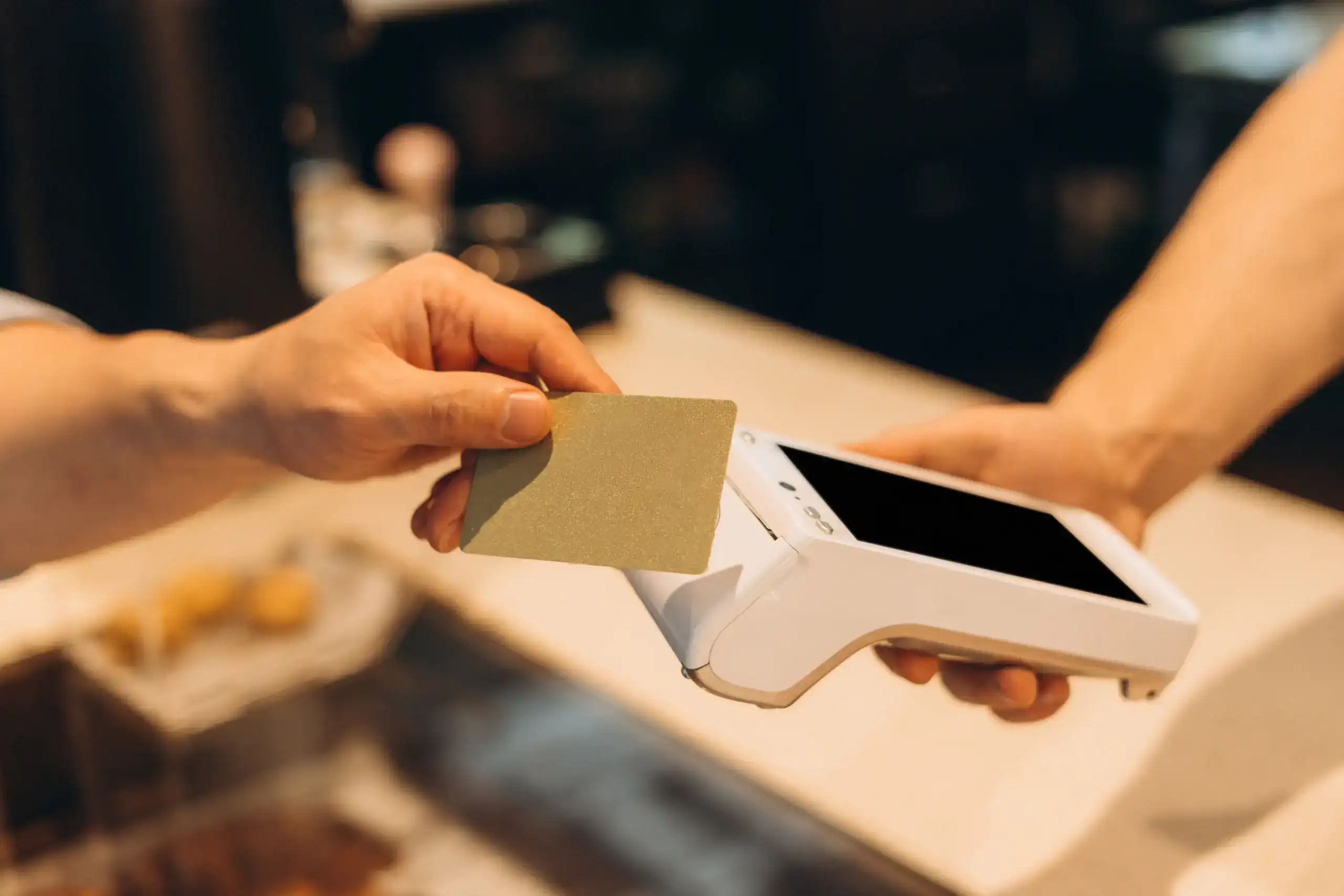
From debit and credit cards to Google or Apple Pay, digital, contactless, and mobile payments are on the rise. That’s why for most businesses, it’s almost impossible to make do without a credit card terminal. Finding the right credit card machine that fits your business model, however, isn’t always an easy task. But if you’re stuck, worry not: In this article, we’ll help you find the best payment terminal for your business.
TL;DR
- A payment terminal makes it possible to accept in-person electronic payments, making it an essential piece of equipment for most businesses today.
- To choose the right payment terminal, you need to have a solid understanding of your business needs, as this will help you determine what type of terminal to look at. Plus, don’t forget that you need to have a compatible payment processor (if you don’t already have one).
- With Stax Pay, we don’t just offer payment terminals and processing, but an all-in-one business management platform that takes online, mobile, and in-person payments, but also provides in-depth reporting and analytics—all with transparent pricing.
What’s a payment terminal?
Also called a credit card terminal, it’s a device that businesses use to accept non-cash payment methods like credit and debit card transactions, as well as contactless payments through a mobile wallet. Without a payment terminal, you’ll be unable to accept in-person electronic payments at your location, making it an essential piece of equipment for most businesses today.
Different types of payment terminals
- Countertop terminal: This is likely the option you think of as a credit card terminal. Traditional countertop terminals now prioritize high-speed Ethernet and WiFi, with many including a cellular failover to ensure you never miss a sale if your internet goes down. Since they’re relatively larger and have limited mobility, they’re not great options if you don’t have a single POS location.
- Mobile credit card terminals: These are smaller, more portable POS systems that connect to a smartphone or a tablet via Bluetooth. They are best used for businesses with no fixed locations, like food trucks. As long as you have a phone or WiFi connection, you’ll be able to accept and process payments with a mobile POS.
- Smart terminals: Essentially a more evolved version of the traditional countertop terminal. They generally come with a touchscreen, and offer extra features like customer loyalty programs, integration with business management tools, and even analytics.
- Wireless payment terminals: These are quite similar to mobile terminals, with the exception that these terminals can operate without needing an additional mobile device for connectivity.
- Virtual terminals: This option is slightly different from the others, as it’s not a physical terminal. Rather, it’s a software that utilizes an online payment gateway so that merchants can process payments via a computer or tablet. A virtual terminal turns your computer into a credit card machine, ideal for taking payments over the phone or processing back-office invoices without physical hardware.
Understanding your business needs
To choose the right payment terminal, you need to have a solid understanding of your business, as this will help you determine what type of terminal to look at. Some questions you can ask are: Do we (plan to) accept online payments? Do we need to accept payments in multiple locations? What payment methods do our customers prefer? How fast are we projected to grow?
Taking the time to answer these questions will help point you in the direction of the terminals you’ll need. If you already have a payment processor, a good way to narrow down the list of potential providers is to see what terminals work with your processor. Otherwise, the next section can help you arrive at a good shortlist.
Key features to consider
When you have a shortlist of some potential payment terminals, it’s important to make sure they match the following criteria. To really evaluate the potential options, try to schedule a demo or in-person session.
- Security and compliance: Make sure they meet the latest security standards and regulations to protect you and your customers’ sensitive data. As you’re handling cardholder data, your provider will need to ensure PCI compliance with the latest PCI DSS v4.0.1 standards.
- Payment methods supported: To futureproof your operations, opt for a payment solution that doesn’t only accept credit/debit cards, but also contactless payments via NFC.
- Connectivity options: If possible, choose a provider that offers multiple connection options, like WiFi, Bluetooth, and Ethernet.
- User experience and interface: How easy is it to navigate the terminal and any additional software it comes with? Is training provided?
- Customer support: Critically evaluate how easy it is to reach a real person should something go wrong. What do reviews on third-party sites have to say about this?
- Compatibility and integration: The best payment terminal seamlessly integrates into your existing tech stack and can further streamline your way of working. Ask your potential provider if they have an API for custom integrations, and if they provide resources for your developer team to implement these integrations.
Cost considerations
Credit card terminals for small businesses offer different payment options, which you should carefully review upfront. For example, they often come with an upfront or initial purchase cost, which is usually higher for traditional terminals. Don’t gloss over any ongoing fees; these can include minimum payment fees, overage fees, and credit card processing fees.
At Stax, we do things differently and offer subscription-based pricing with access to direct cost processing, and no hidden fees. That means that instead of taking a cut out of your sales, we’ll just charge a flat membership fee with wholesale credit card processing costs, saving you up to 40% in payment processing costs.
Choosing a reliable payment processor
Before you head off to buy your new payment terminal, don’t forget that you need to have a compatible payment processor (if you don’t already have one), as the processor will route the payment information from the terminal to the bank and back again, essentially authorizing and finalizing the transaction. They also handle disputes, refunds, chargebacks, and fund settlements, so it’s critical you opt for a platform that’ll help you run and grow your business.
With Stax Pay, we don’t just offer payment processing, but an all-in-one business management platform that takes online, mobile, and in-person payments, but also provides in-depth reporting and analytics—all with transparent pricing.
Best payment terminals
Need some help finding the right payment processing equipment for your business? Stax has options, no matter what you need.
QD2 Dejavoo: This mobile wireless terminal features a color LCD touch panel and accepts chip, swipe, and contactless payments (WiFi, 4G/LTE).

QD4 Dejavoo: The dependable countertop terminal features a color LCD touch panel and accepts chip, swipe, and contactless payments (WiFi, Ethernet).

Dejavoo D1: This cloud-powered POS solution is ideal for restaurants and retail shops. Connects to WiFi and Ethernet, and accepts chip, swipe, and contactless payments. Features dual screens for merchant and customer.

Swipe Simple B350 Reader: Securely connects to both iOS and Android devices using Bluetooth Low Energy. Supports EMV, magnetic stripe, and contactless and mobile payments.

Modern smart terminals (like the Dejavoo QD series) combine the reliability of a countertop unit with the apps and touchscreen interface of a tablet.
Need more details? Check out the full range of payment terminals compatible with Stax Pay here.
Wrapping up
Finding the right payment terminal—and payment processor—that aligns with your business needs is an important step in growing your business, but armed with the knowledge from this blog post to conduct your own research, you can choose the right option that will scale alongside you.
If you want to level up your payment processing game, contact Stax to learn more about which of our payment terminals and processing solutions would work best for your business.


