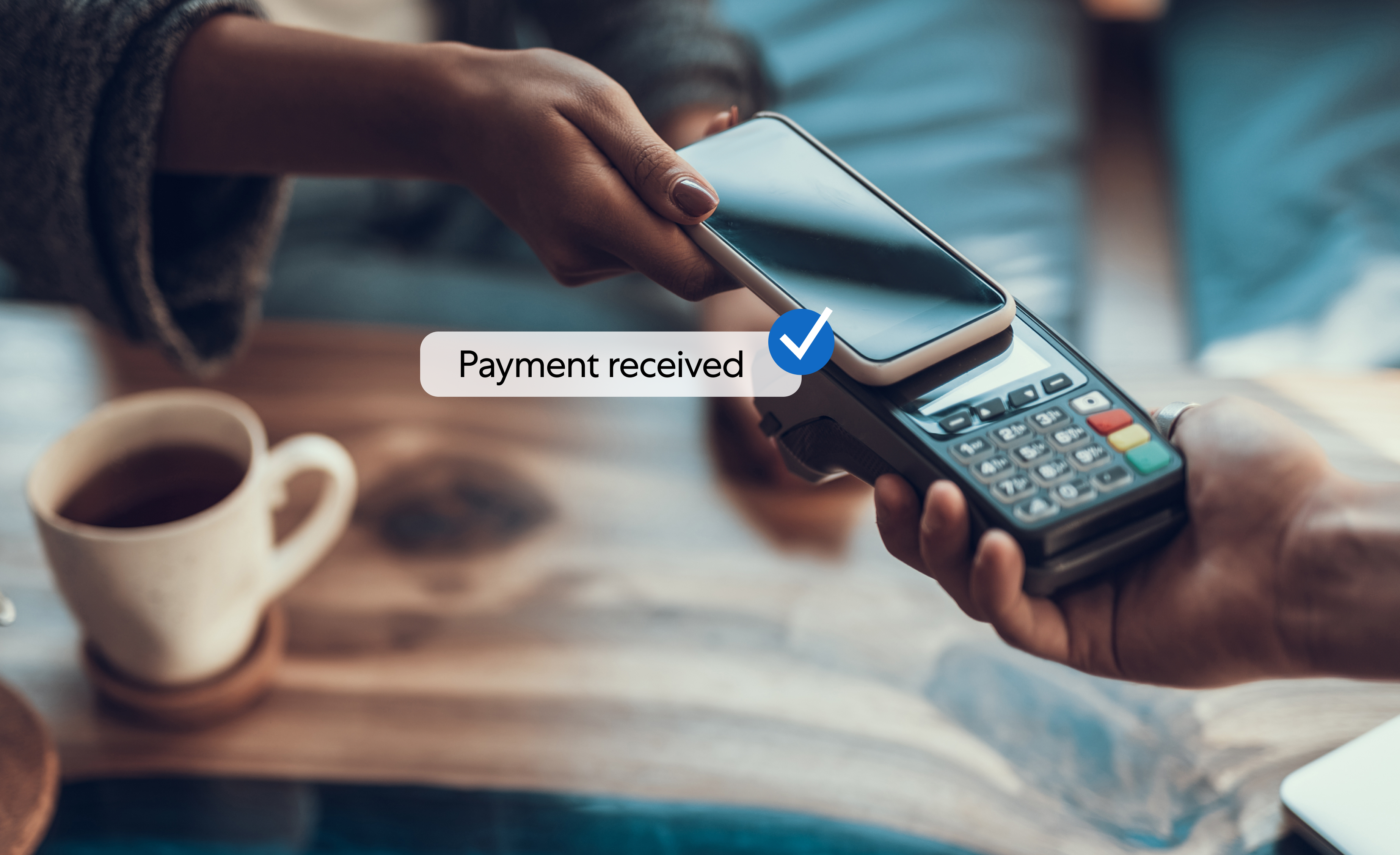
The desire for frictionless payments skyrocketed contactless transactions to 8.1 billion during the COVID-19 pandemic. By 2025, the contactless transaction value rose to USD 8.75 trillion, with the projected transaction value by 2030 to be USD 18.1 trillion.
Customers now prefer to skip the slow, fraud-prone process of swiping or inserting magnetic stripe cards. They simply tap their credit card, mobile device, or smartwatch to pay. Instead of using the actual card number, the system generates a unique token for each transaction. This tokenization process prevents fraudsters from stealing reusable payment data.
This is why 82% of cardholders with a contactless card have used it at the point of sale. Without contactless payment options, you risk losing sales, slowing down checkout times, and letting fraud creep in.
Here’s a look at the most popular types of contactless payment methods and how they can transform your checkout process.
TL;DR
- The top 7 forms of contactless payments are: Near field communication (NFC) technology, Radio-Frequency Identification (RFID) technology, tap-to-pay cards, mobile wallets, wearable payments, QR code payments, and cryptocurrency transactions.”
- Choose the right tech based on customer volume—NFC for small businesses, RFID for high-traffic stores, and QR codes for a quick, low-cost setup.
- These 7 contactless payment methods come with built-in security features like encryption, tokenization, and proximity-based protection. However, staying ahead of fraud requires proactive measures.
7 different types of contactless payments
You don’t have to jump on every type of contactless payment out there. For small businesses, every dollar spent on payment tech needs to count.
Let’s see how these 7 types of contactless payment solutions differ and how each one could help streamline your operations.
Near-field communication payments
Near-field communication enables devices to interact and transfer data through close-range connections (not more than 4 to 10 centimeters). Think Bluetooth technology but without manual device discovery and pairing.
NFC payments protect customer’s payment details through encryption, tokenization, and biometric authentication. They also require device proximity, so it’s harder for fraudsters to intercept or access payment data remotely.
Radiofrequency identification payments
Radio Frequency Identification (RFID) is a wireless communication technology like NFC. The difference is that RFID encompasses a broader range of frequencies and operating distances, from inches to 100 meters or more. .
NFC is a subset of RFID technology. Thus, all NFC payments are RFID payments, but not all RFID payments are NFC.
RFID-enabled payment devices use radio waves to transmit payment information to a card reader.
Examples include closed-loop systems like those used by festival attendees (e.g., RFID wristbands) or open-loop systems like contactless public transit cards and key fobs linked to payment systems for building or office entry.
Businesses can integrate RFID technology for seamless in-person payments, store credits, tailored loyalty programs, and enhanced experiences.
Tap-to-pay credit and debit cards
Credit and debit cards aren’t contactless by default. They contain a separate NFC antenna and are embedded with EMV chips (Europay, MasterCard, Visa) that use either chip-and-PIN or chip-and-signature authentication methods.
When shoppers tap their card on an NFC-enabled reader, the card sends the reader an encrypted signal containing payment information. The reader then verifies the card payment by checking with the customer’s bank or processor before approving the transaction.
Contactless cards account for over 60 to 70% of total card transactions. Yet credit card companies and financial institutions continue to refine the adoption of tap-to-pay systems.
Jennifer Marriner, Mastercard’s EVP for Acceptance Solutions, shared that Tap to Pay now supports eCommerce card transactions.
“If you’re shopping online, you can tap your card against your phone to complete your transaction without having to type in your card information. You can also save your card on file for future purchases.”
QR code payments
QR code payments offer a fast, touchless option to process transactions without NFC and RFID hardware.
To implement this, businesses must work with a payment service provider that supports QR code payments (e.g., PayPal, Venmo, and Alipay).
These platforms generate static or dynamic QR codes that redirect customers to their preferred payment app or digital wallet.
- Static QR codes. These remain the same and redirect customers to a fixed payment page or account, often displayed at the counter. Customers enter the amount manually and confirm the transaction.
- Dynamic QR codes. Changes every transaction to specify the payment amount and details. Accessible via digital invoices or from the merchant’s app.
Small businesses can go cashless without a hefty investment or lengthy setup using QR codes.
Mobile wallets and in-app payments
Mobile wallets facilitate in-store and online transactions without cash or physical cards. By 2025 to 2030, this convenient contactless payment system will be the go-to method for 3.8 billion users worldwide.
Customers can preload funds into their wallets by:
- Linking a bank account for direct transfers
- Adding money from another mobile wallet
- Depositing cash through partner stores
They can finalize their purchase by tapping or scanning their phone and verifying the payment with a fingerprint, face ID, or passcode.
Businesses with websites or mobile apps can also embed wallet payments. Shoppers can complete transactions without leaving the app, helping reduce friction at checkout.
Wearable payment technology
Wearable IoT devices like smartwatches, fitness trackers, and rings let users shop without pulling out their wallets or phones. These smart devices use NFC or RFID technology to enable secure, tap-to-pay transactions.
It works much like a mobile wallet. Shoppers add their cards to a dedicated app, such as Apple Pay (for Apple Watch) or Fitbit Pay (for Fitbit devices). Tapping the device on a payment terminal finalizes the sale.
While still a minority, wearable payments are a fast-growing segment. The market share of wearable payments is projected to see significant growth, reflecting the increasing consumer preference for frictionless, hands-free transactions in tech-forward markets.
Cryptocurrency and blockchain-based payments
Cryptocurrencies are digital assets that leverage blockchain technology—i.e., a secure, distributed ledger that records and verifies transactions in real-time.
Crypto payment systems don’t require an intermediary. The payment goes directly from the customer to the merchant without a third-party processor. Here’s how:
- The customer scans a QR code or taps an NFC-enabled crypto terminal to initiate payment.
- Miners or validators verify the transaction on the blockchain.
- Once confirmed, the funds transfer directly from the customer’s crypto wallet to the merchant’s wallet.
Some merchants accept payments using the Bitcoin Lightning Network for instant, low-fee Bitcoin transfers or stablecoins to avoid market volatility.
“While traditional crypto transactions processed directly on the blockchain are final and irreversible (meaning merchants don’t get native chargeback protection), some crypto payment processors offer a fiat settlement option with fraud and chargeback guarantees to protect the merchant.
How businesses can accept contactless payments
Shoppers don’t want to fumble with cash or insert cards anymore. They expect to tap and go.
Invest in NFC or RFID-enabled payment readers that support contactless credit cards, mobile wallets, and wearables.
NFC is ideal for point-of-sale transactions where one card or device is presented at a time. While some RFID applications can handle inventory or large groups simultaneously, the standard EMV contactless card/mobile wallet transactions used by most merchants are all based on the NFC standard, regardless of traffic volume
For businesses looking into cryptocurrency payments, adding blockchain connectivity can attract a new wave of digital-first customers.
Preventing fraud in contactless transactions
Convenience shouldn’t come at the cost of security. The 7 contactless payment methods above feature encryption, tokenization, and proximity-based protection, you must take additional steps to stay ahead of fraud.
- Invest in up-to-date, PCI-compliant solutions.
- Enable two-factor authentication (2FA) for high-value transactions.
- Updates payment systems and software regularly to patch potential exploits and strengthen defenses.
- Train staff to spot potential fraud, such as skimming devices or suspicious transactions.
Fraudsters don’t wait and neither should you. Securing your payment systems today means avoiding costly breaches and reputational damage down the line.
Future-proof your payment processes with Stax
Future-ready businesses embrace contactless payments to stay competitive.
Stax offers a scalable, all-in-one platform with tap-to-pay terminals, instant online shopping carts, virtual portals for phone orders, and automated invoicing via email and text.
Equip your business for what’s next with AI-driven automation and seamless omnichannel support with 0% markup processing fees. No fluctuating rates; zero hidden fees.
Adapt, scale, and optimize your payment processes with Stax’s industry-leading tools and transparent pricing. Request a free demo today.


