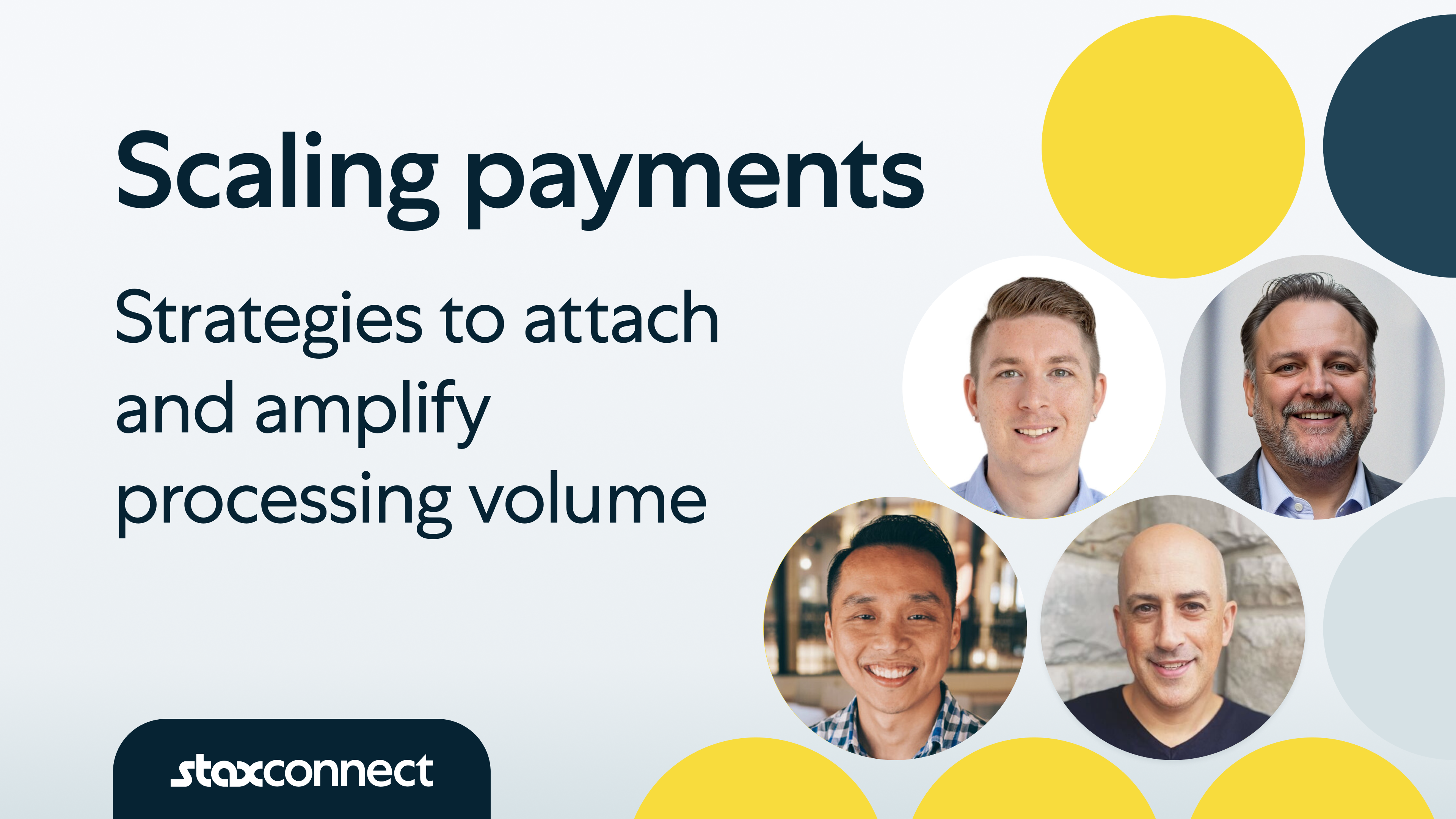
Hi. My name is Ray. I’m the VP of marketing here at Stacks, and I’m so glad that you’re here with us today for our payments led growth series. And today, we’re talking about increasing payment attachment, increasing your processing volume. And I have a great panel of guests here today. We have some payments experts in the house. So I’m gonna hand it off to Jeremy to introduce yourself and then, have it have Fred go and then have Brandon go. But why don’t you guys give us a brief intro on your title, what you’re doing, and how many years of payment experience you have? Sure. Jeremy Kral. So I started in payments way back in nineteen ninety nine and been in the industry many, many years, focused pretty much exclusively on the integrated space for about the last fifteen years, and the technology side. Been around a number of payment processors over the years, joined Stacks last year as the SVP of our payment partner growth team. So Brandon and I are on the same team. Glad to be here. Awesome. Fred, why don’t you get kick us off? Sounds great. Yeah. Fred Nelson, VP sales enablement here at at Stacks. I run our Stacks Connect plus program, which focuses on helping partners, attach their payments and and service and support their customers. But been in payments for twenty plus years, worked at a few different processors, ISOs, familiar with all all things integrated payments, and, been here first with Stacks for almost two years. Nice to meet everybody. Awesome. And last but not least. Alright. Thanks, Ray. Thanks for having me. My name is Brandon Newell. I’m a partner growth manager here at Stacks. I’ve been in financial services for about fifteen years now and payment specific for almost ten years. And I’ve been with Stacks for two and a half years, and my job is to work with our partners on payment attachment, payment adoption, make sure that your customers and your users are out there using our mutual product. And, yeah, thanks for having me, Ray. Awesome. Alright. So let’s dive in. Payment attachment, how do we increase that? Before we get into how do we increase it, let’s talk about what it is and why it’s important for, our SaaS platforms and our partners. So I’ll give a brief dictionary definition of it, and then I’ll, pass it over Jeremy to see to get some more expanded context. So payment attachment refers to the adoption and usage of integrated payments by existing customers of a company. It is a key metric for measuring the growth and success of a payment processor as higher payment attachment rates lead to increased processing volume and revenue. So that’s our dictionary definition. But Jeremy, why don’t you get into more specifically, why does this matter for vertical SaaS companies, ISV partners? Sure. So the answer is revenue, typically, and there’s a number of factors that contribute to that. So I’ll start with basically from a revenue multiplier effect. If you look at how you generate your revenues associated with any given SaaS platform, once you bolt on, the payments and the integrated payments, especially a tightly integrated payment solution, not only does that become a stickier product and lower churn, which increases revenues, but the payment residual stream associated with the payment processing itself will, deliver incremental revenue. And it’s not unusual for our successful partners that have a high payment adoption rate to see multiples, higher on their payments residual stream than their necessarily their SaaS business. So in a in a best case scenario, that can be as high as the SaaS business or sometimes two or three or four times even higher than what the SaaS fees are, from a residual perspective. So there’s, there’s there’s that level of increased revenue. The stickiness gives you additional data. So when you look at the longer those customers are with you, the more payments data that you have, the deeper embedded you can be with those end merchants. And it really drives the long term value of that relationship and that long term value being stickier, having multiple revenue streams associated with any given relationship from an investment perspective. So if you have, either, you know, any sort of PE or VC backing or even just privately held, you know, that is a metric that many investors are looking at today is what does your payments business look like in addition to your SaaS business? Love that answer, Jeremy. Yeah. So, you know, not only from a subscription revenue perspective, but also layering in what is your embedded payments revenue look like? And, you know, revenue is the name of the game, in in our world. So, gentlemen, any other comments there, Fred, Brandon? I mean, I think Jeremy did a great job covering the the highlights there. I mean, maybe a couple of things I could add, or maybe just elaborate on is, you know, it it is it is a big focal point for for ISVs and even just for the customer. Right? The best way to utilize their system is everybody’s gonna accept payments, a big part of everybody’s business. And so having a nice strategy built around that to integrate it from an onboarding, activation, you know, promotion standpoint, significant value. And and oftentimes, the payment revenue can even outweigh the SaaS revenue. And I I think that’s, underestimated quite a bit in this industry by ISVs thinking that, you know, naturally, they’re focused on just their ISV software and their SaaS solution. But payments are very much underrated and, can often, like I said, outweigh what they make on the SaaS revenue. So so definitely, just to elaborate a little bit, you know, a big focal point there, they shouldn’t overlook it and and make sure they’ve got a great partner to support them however they wanna go to market with their payment strategy. Yeah. That’s a great call out. Yeah. Especially when you think about from a business to business perspective, but then from the business to business to consumer perspective, there’s layers to that. And then if you can get down to, like, that other layer, you know, there’s there’s some more, there’s definitely some more revenue to to be had, rather than just stopping at that b to b level. Right? So let’s get well let’s get into the next question and this might be this might seem like an obvious, you know, question with an obvious answer but, I think it’s great to just kind of go through and explain how does payment attachment contribute to processing volume growth? Jeremy, why don’t you take that one? Yeah. Sure. So, if you look at essentially, when we define payment attachment volume, really what we’re talking about is what percentage of your overall customer volume that’s going through your platform is attached to a payments delivery that you are supporting through that integrated or embedded platform. So what we’re not talking about are stand beside payments. So if you think about any of your customers who may be using, you know, a terminal from their bank or a virtual terminal or a mobile app that you didn’t build, those are those are non attached transactions. So you’re talking about things that happen outside of your integration and outside of your software SaaS solution. So, obviously, you’re not capturing that volume if it’s not integrated. So by having a fully integrated solution, you’re essentially driving additional attachment rate through the value of the product that you create. So it’s automatically reconciled. The payments are faster. You know, all of the the things that happen from an integrated point of sale perspective, the tighter that integration is and the more value that’s in that integration, the higher that’s going to drive the volume through your integrated solution because of the automated reconciliation capabilities and just the the all of the value that comes along with that to to the end merchant. So obviously the higher volume back to what we said a minute ago, more revenue, stickier customers, less churn on that portfolio. Got it. Great answer. Yeah. Attaching more payments to your customers, that’s gonna have downstream effects too. That’s gonna increase your processing volume. That’s gonna increase your revenue overall from embedded payments. So, yeah, love love that perspective. Fred, what what role do you think, educational resources or, educational resources to support, different, software platforms, how does that play into, maximizing processing volume and increasing payment adoption? Yeah. It’s a it’s it’s a good question, and I think one that a lot of our partners, really struggle with. And, and in the industry, in my twenty plus years experience. It’s not, it’s not something that’s very easy. It can be complex depending on the different integrations, the features, the functionality, the competition, the different rate structures in the industry. And there’s, there’s an unknown from a merchant perspective too. So from the actual customers using the solution in, the SaaS software, you know, don’t don’t necessarily always understand the back end functionality of payments, and even how to maximize it. And so there’s a few key areas to focus on, that really need to be integrated from start to finish from the sales engagement upfront, having a pricing strategy that’s aligned to drive adoption. A lot of people are now familiar with some of the larger players out there that, have pricing strategies that influence the behavior. And if you don’t choose the preferred processor or your preferred partner, there’s additional fees that you have to pay to go elsewhere. And there’s a very strategic reason for that because it it costs money, to work with third parties. It costs money to support those from an integration and a compliance standpoint, internal dev resources. So it’s very important to start upfront when you engage with the customer and to make that a big part of the value prop. Have pricing initiatives that drive the right behavior in the adoption, get them in the front door, compare against others, etcetera. But then there’s also the piece that happens, once they get approved and into underwriting, and then activated. Because, there’s a similar concept here is that just because customers approved for a merchant account doesn’t mean the behavioral changes happen or they even really kind of are removed from their existing provider. They might still have a standalone terminal. They might have a third party gateway or a virtual terminal. And so there needs to be resources designed, both from personnel, collateral, and, things like pendo messages internally, in app messaging to make sure that customers are handheld the right way to actually adopt the behavior. You know, that gets out to the teams internally, and everybody’s familiar with that process. So a lot of it is focused on, content collateral, marketing automation, you know, built out to go from start to finish to make sure that that happens post sale, and you see that attachment increase. Love that. Love that, Fred. Yeah. And I would add on there real quick too. One of the I would say one one thing to add that Fred is a hundred percent right. And and I would add that you have to be intentionally focused on what your payment strategy is going to be and how you’re going to handle that payment attachment. You know, over many decades of doing this and especially the last couple really focused on integrated, I can tell you that one of the number one largest, biggest mistakes that I will see any given software provider make is not having an intentional payment sales strategy. So whenever they think, oh, I’ll just have my SaaS sellers do it, everybody needs payments, they’ll just bolt it on. Well, as soon as they start getting asked about, you know, how the gateway delivery works and how the reporting works, what is interchange? You know, those people can sometimes get lost quickly if they haven’t been intentionally trained on on how to do that sale. And our partners, partners over the years that have been more successful have a very intentional focus on that. Either they have the the personnel and the training to specifically support payments or they lean on a partner like Stacks to help them supplement that. But it’s a fatal flaw if you just assume that payments will always be attached with the SaaS sale, and it requires no additional skill set to close that business. I love that. So let’s talk a little bit about that, sales process. So making it initial part of the sales process, you know, that’s very key foundation. I I would love to kind of open a can of worms a little bit. Should there be, you know, a SaaS a SaaS sales team and a payment sales team? Should that be the same seller? How how should how should, SaaS companies think about that? I’ll kinda leave that, leave that, grenade there and and let you guys kinda pick that up. Well, I’ll start off. It really depends on where a ISV organization is in their payments journey. Those that are new to payments and don’t have that infrastructure in place might need a little more support from their payments partner in selling payments, supporting payments, and all of the things that come with it. Whereas, software companies that have been around a while and have this payment infrastructure already in place and have those sales motions, they might have a dedicated, team that’s already just solely focused on payments. And that is their one job is to sell payments and garner payment attachment. But it it really just depends on where they are in their payments journey. But in your hunt for a payments partner, it’s important to find one that’s gonna meet you where you are in that payments journey. Yeah. I I agree with Brandon. Maybe some, some other comments too is it it he’s right because payments is complex in its nature, different pricing schedules, strategies, you know, the technology behind it, what the competition does, how your how your how your competition does on the SaaS side, how that all integrates the value prop. I mean, if you don’t if you don’t have folks internally that can’t answer fundamental questions around what is interchange and breaking down interchange categories and identifying how pricing comes into play there. Jeremy touched us earlier about settlement times and, being able to answer all the fundamental questions. If you can’t do that, it’s gonna make it that much more difficult to attach payments upfront because you’re not gonna sound knowledgeable, and the customer’s gonna sense that. And on the same side, you also need to have that from a support standpoint too. Because if you’re doing all this yourselves, the custom your your internal teams need to know how to answer those questions as well. And we see a lot of difficulty in the space with, SaaS providers being able to do that successfully. And oftentimes, if they’re not staffed appropriately with the knowledge and the resources internally, they they look elsewhere, to help that. And so, Brandon touched this before meeting you where you are in your payments journey. And so one of the things that we do here is we do try to assess that upfront with, partners that we work with, try to understand, you know, what their their level of knowledge is around payments. If they wanna do this themselves, we can support them content collateral trainings, etcetera. And some can evolve over time. But if you don’t have those resources upfront capable of handling that at all aspects of the the workflow, then, it’s it’s you you’re probably better off working with somebody that can support you that way and and take on that responsibility. And and maybe you you pivot down the road. So it’s definitely something you need to look at and and assess where you’re really at, how much really no payments. And, hopefully, if if, if you’re working with stats, we can help you do that and make sure you’re set up for success. And the other the other thing that I think will also help as we get into KPIs and, you know, understanding, how to measure that is if you are less than thirty percent payment attachment on your portfolio, and even that might be a bit aggressive, if you’re struggling to get above that number, then you’re probably not doing a good job of attaching payments and you need some help. If you’re above fifty percent in that range, at least at a minimum, I’d say you’re probably on the right track. But that’s definitely a good barometer, to kinda measure, how well you’re doing it today. And some some of the top partners in the industry, for for ourselves and and others, I mean, they can see attachment rates in the eighty, ninety percent range. And so that’s where everybody should strive to be. And if you’re not near that number in any way, shape, or form, then you should probably be looking for some help to, figure out a strategy to help you get there. Awesome. Love that. So I heard if you have a you know, if you have your sales team, make sure that they can be trained on payments. The ideal state would probably be to have a team a separate team that can handle the payments because it’s such a complicated sale. There’s a lot of nuance there, a lot of questions to be answered. And if they’re not trained on that, then it’s gonna make that a lot harder, a lot more friction. But, also, if you don’t have the capabilities of that, there are partners that are able to come alongside you and provide that, those types of teams for you so then they can be a part of your sales team to make sure that that revenue is kinda driven up. So love that answer. I think that makes a lot of sense, and, hopefully, that’s a great takeaway for, any vertical SaaS companies that are listening. And you’re seeing your payment attachment rates below, the first place to look is in that initial sales process and then making sure that the teams are trained. And if not, then looking for additional resources that can, kinda supplement that. Awesome. One of the things that, I’ve heard is is a is a strategy that people use to drive payment attachment is an end of life campaign. So could one of you kind of explain what that is, first of all, and then second of all, kind of walk us through a real life example of using a type of campaign like that, and then maybe some of the pitfalls that, you know, that you can avoid. And then also, like, maybe some of the benefits that doing something like that can be helpful. Any any volunteers? Fred, I think you volunteered. Jerry, on mute if you were trying to chime in there. I was. I’m sorry about that. Yeah. No. I was gonna say that, I think it’s a combination of a a sort of a a carrot and a stick approach in in terms of if you’re gonna have an end of life campaign, which is can be a very, strong way of of encouraging migration. And I’ll probably let Fred expand on that here in a minute. But if you look at, sort of history of how a lot of these platforms get maintained, you may decide that it’s in your best interest to either consolidate multiple integrations that might have existed in the past. Let’s say you have one or two or ten, you know, processors or gateways, and you say, okay, here’s my preferred payments path, my preferred payments partner. And you have an idea that, you know, down the road, whether that’s, you know, thirty days, sixty days, six months, two years, whatever it is, you set some point in the future that, hey, we would like to end of life this particular product or this line of products that we’re supporting across multiple platforms, and we want to go to a single delivery, you know, single endpoint as an example. You can do things to say, well, before we announce that end of life and and force people onto this particular direction, we’re gonna give them incentive to move early. And so that incentive could be, hey, you know, the new functionality that we’re building on this integration, if you want to leverage that, you have to switch over here. So we’ve recently done that in real life as an example with a partner who, implemented some additional installment and recurring billing on their platform. And so for their their customers who had cardholders that they were billing them every month, all of their recurring billing capability went on the new on the new platform. And they said, okay, if you want to leverage this new capability, you need to be over here. And that way, they’re encouraging that behavior because, otherwise, the the the customers have to manually enter those transactions on on the legacy solution. So you can incentivize the migrations that way. You can incentivize through incentive amounts or maybe waiving SaaS fees. There’s different things that can happen. But then you essentially, that’s the carrot. Right? You wanna incentivize people to move to the preferred gateway, the preferred platforms, preferred integration. And then maybe that way, whenever you announce an end of life that might force that over to your preferred gateway, it’s not a complete surprise to them because they’ve already been told they need to migrate, and here’s some, some reason why. But I’ll let, I’ll let Fred expand from there. Yeah. I think Jeremy’s spot on. You know, there can be a delicate way of doing this, because I definitely what we’ve seen in my experience, work in different organizations that that there’s a fear that, you know, their their, SaaS company is gonna lose a lot of customers. And, even when we’ve seen, you know, radical moves to have to do that in a short period of time, we haven’t seen, real life examples of massive amounts of tradition, of attrition. And I guess that all depends on maybe what would be massive. Right? But, we don’t see twenty, thirty, forty, fifty percent, attrition. We see high rates of of adoption, but but there’s a right way to do it. And and in our experience, I think the wrong way to do it is sending out a notice and giving people two weeks or three weeks to do something. We do realize that sometimes there are there are reasons why things like that have to be done and that and that’s fine. But if it’s done the right way, it can start with education campaigns. As Jeremy said, it can be combined with incentives. You know, in the industry, what what I’ve seen is often SaaS companies are trying to grow their portfolio. They’re trying to grow it by any means necessary, sign as many customers as possible. And oftentimes, that means that the perception is that they need to have multiple gateway integration partners. What ends up happening inevitably is they find out that that’s just it’s too complex. It’s too expensive. You have to train everybody on multiple platforms that aren’t necessary. And so when it’s done properly, you can educate. You can build out new features on the platform you wanna use. You can have pricing strategies aligned around that. And then with crafty, you know, delicate campaign efforts and census campaigns with appropriate timelines, you know, you can give customers a heads up to to make decisions, but also start to see the value in why they wanna transition, ahead of time. And so, you you give you kinda do it that way. Everybody you get a good migration rate. You can see ten, twenty percent conversion rates. And then at some point, you know, you might wanna have an official end of life, whether it’s, you know, compliance, feature driven, etcetera. But at the end of the day, customers are using your solution because they want to use your solution, and they wanted to optimize how they’re gonna run their business. And they’re gonna keep doing that as long as you’re providing the right solution for them. And I think that’s often overlooked is that when people think, oh, I I’m gonna end of life this solution, that customers are gonna leave. And then reality is they wanna stay with you. They just need to make sure, you know, they at least have their table stakes discussion, their feature set available to do that. And so that so long as that’s the case, we see, we see low attrition rates and we see high adoption rates. And in the end, it’s just a better all solution for, the SaaS company and and the customer themselves. It’s a great point, Fred. I just wanna add to it a a couple of things, that I’ve seen in real life with, some of the partners I’ve worked with. It really can benefit to give an added piece of value if you’re gonna do an end of life campaign. Let’s say it’s a version two of your software. You’re you’re enhancing your overall software and bringing it more current and more giving a better user interface, giving a better UX, and that’s how you’re driving the transition. So move to v two of our software. We’re end of life in v one. Or if it’s something where, as Jeremy alluded to, you have a new recurring payments platform. And in order to take advantage of it, you need to move to our new payments provider. Those types of activities can really help that merchant mindset and that consumer mindset to, adopt these changes that you’re trying to trying to do and adopt this end of life because they’re getting something out of it at the end of the day. Yeah. I love that. So it doesn’t have to be a scary thing. It sounds scary to end of life something, but, it can be, you know, something that adds value to them and you can incentivize that. But then also, it’s one of those things that you don’t know that it’s actually better for you, but I’m going to do this painful thing for you and it’s gonna be it’s it’s gonna be a better thing for you at the end of the day. So, it is it is a it can sound like a scary thing, but definitely, that’s def that’s definitely one of the strategies to keep in mind. And, you know, I’d say, don’t don’t just, like, say, hey. That’s too scary. That sounds too hard. I don’t wanna upset customers. Let’s you know, if if if you’re a Stacks connect partner already, like, let’s work with you and let’s help you to do that. Or if not, you know, like, look for a partner that’s gonna be able to have these types of strategies in place to help you to maximize not only the revenue, but, creating a better experience for your customer. Awesome. And may maybe one thing I’ll just add on that right and close it out. It is, one thing that we’ve seen successful too is having a personal touch, associated with those kind of campaigns too. So because a lot of times, especially with payments, you know, people have had previous processors before. Maybe there was technical limitations. They may not have had great experiences. And so when you’re transitioning somebody with an end of life on a product, especially if you’re trying to attach payments to it, so sometimes the the dots aren’t always connected on why, and they don’t necessarily understand all moving pieces behind the scene from a a support and resource standpoint. So we’ve seen success in putting a personal touch on it, with phone calls and personal emails and somebody to be responsive to assist with questions. That way it can be more bit more relatable. You know, the human element, which nowadays, I think, is, it’s kind of a lost art. Years ago, we’re all used to people calling us and following up and and talking. Now everything’s all automated, and and and people feel like they don’t really have any control or say or their voice isn’t heard. And so I think that’s a a big part, today where we’ve seen success in our experience is, you know, just being able to call somebody and and talk to them and explain what’s going on, rather than feel like you’re really being strong armed. Like, they get it. There’s a little bit of a voice of reason discussion that that can happen too. So we we have seen success there as well. Yeah. That’s a great point. And I think that, also adding that personal touch to help them with whatever scariness that that might involve or actually kinda walking them through like, hey. We can we we can do this pretty quickly. It’s not that hard. We can kind of make make those changes and, and having, yeah, having that personal touch, I think that’s, yeah. I mean, everything’s automated and eventually the robots are gonna take over everything. So, yeah, it’s, it’s an interesting place to be. Alright. So let’s talk a little bit about, let’s talk a little bit about how we measure success. So we talked about, some strategies. We talked about, some different ideas and how do we increase payment attachment. But let’s talk let’s talk about what are the different ways one, what are the essential KPIs that, our ISV partners should use to measure their opinion attachment? How do they know if they’re successful? Fred, you alluded to some of those numbers already, but we’d love to kind of get an idea of, what are the key metrics that people should be aware of? And then maybe we can talk a little bit about just, like, you know, just some ways to increase or, you know, try to drive those metrics up. Sure. I mean, I would jump in and say that it all starts with the payment attachment rate. That that is the metric, and then everything else flows behind that. And so, I’ve said before, that I think you’ve got about fifteen percent on each side of from zero to a hundred that sort of happened naturally, meaning about fifteen percent of your customers may never listen to what you want and not do what you say, and fifteen percent will do whatever you say. And so you kind of have to measure your success, you know, above and below those numbers. And so to Fred’s earlier point, if you’re in that thirty percent attachment range, I would argue that, you know, maybe fifteen percent of the customers would point and click if you told them to. And so maybe you’re you’re upselling the other fifteen percent. But I would see a successful attachment rate program in somewhere in that fifty to eighty five percent range. You know, if you’re below fifty, you should be taking active measures to get above that. And if you’re if you’re the closer you are to the eighty five percent range, the closer to perfection that you’re getting. And so behind that, once you realize how many SaaS deals am I doing every month, what percentage of those are payment attached, it all starts there. And then what that drives is what is my average process volume per customer? How much revenue am I driving off of my SaaS business versus off of my payments business? And did one of those lift the other? Typically, the answer is yes. You know, what is my activation rate? How fast am I getting my customers to go live in the market? And how is that impacting my revenue? And then what is that revenue per customer? And how does that turn into a long term revenue trail? So, for example, if you look at your churn rate and your stickiness level and you say, okay, you know, before I had payments attachment, I know historically my average customer has stayed with me for twenty two months. Well, where do they stay now? If you’re twenty six, twenty eight, thirty months, then that’s additional incremental revenue you’ve created just off of that payment attachment. So I’ll let Fred go from there if he’s he’s he’s got some others, but those are the ones top of mind how I would measure KPIs with the payment attachment program. Yeah. Yeah. I mean, I covered a lot of great ones there, Jeremy. I agree with you. And, it it the only other ones I maybe would add is just depends on the experience of the SaaS provider. And, you know, because it’s all relative to some degree. If, if a SaaS provider is selling, you know, twenty customers a month, twenty new SaaS customers a month, and they’re attaching seven now, and they were attaching two before, you know, they’re gonna see a big increase for them, but they may not realize that there’s still a lot of room for growth. And depending on what stage they’re at in their journey, you know, they’re looking to be acquired. Are they looking to just improve their revenue? Then they’re gonna have to start taking a closer look at what’s a go to market pricing strategy and how competitive that relative to their market and and the margin on payments and, other areas that they can they can find some improvements. But we do look at all that. We measure a lot of it. We we talk about even even close ratio and attachments, of of recognizing opportunities, your addressable market, you know, etcetera. So so not too much to add on Jeremy without, you know, getting too deep in the weeds, but, certainly, I’d recommend if you’re taking a closer look at that, trying to determine margin on your your payment processing revenue, how that competes in the industry, compares in the industry. All that should be looked at, with a fine tooth comb and make sure you understand where you’re at, how you compare, and, you know, how you’re performing because that’ll give you some insight too, when you look at industry metrics. You know, you might be attaching a good amount of payments, but maybe a go to market pricing rate is is is really low, like, below market low, where you need to, bring yourself back up to market and, you know, increase your your revenue there as well. So there’s lots of things that you can look at, you know, to see determine how successful you are. And, Ray, I’m gonna point into the interviewer for a second. I was gonna say, Brandon, jump in and give us a real world example because I know you’ve lived this many times. So yeah. I I think we were probably both about to say the same thing off of Fred’s last point. So Fred’s last point’s an important one where software companies, when they first roll out the payments program, human nature is, let’s do an aggressive rate to get people on this platform. However, I see time and time again, those rates aren’t revisited. So while you might have an industry leading, go to market rate that you’re charging your your merchants when you first roll out, you’re not going back and doing those activities, to review those rates and review that go to market rate and adjust it with the adjustments and interchange and the adjustments and the just the overall market because your user base may change. The the ideal customer that your merchant has changes over time as your business continues to evolve. And as that business evolves and as that business change, so does the cost associated with card processing. Every consumer has different types of cards in their wallet. And the more the more variety that’s out there, the more that, rate can can sway and the more those margins can sway a little bit too. So it’s important to partner yourself with a payments company that’s gonna work with you and visit those, go to market rates on a regular basis to ensure that you’re offering, a, the most competitive rate out there, for your merchants, but b, one that protects your margins as well. One that isn’t treating payments as a loss leader for your business, and it’s truly treating it as a revenue driver for your business. Thanks. Yeah, I would love to add on to that from the from the from the rates perspective. Brandon hit the nail on the head there. Our most successful partners are those that have pricing programs and strategies that are at or in some cases above market rates. Those that are constantly chasing, you know, want to be the cheapest in the market. You know, all you’re doing is you’re chasing low value customers to start with and you’re training your customers to chase the next lowest price that comes across their desk. And so our most successful partners are those that have a level of integration and a level of value that they’ve created through their product integration that is so tight and valuable to the merchant that they don’t mind to pay a little bit more for it because it’s saving them time, money, resources, headaches, personnel, chargeback losses, reconciliation, funding. I mean, people sometimes forget we’re turning electronic transactions into real money here. This is the cash flow in the lifeblood of a business. And so it not only impacts their day to day cash flow, it impacts, you know, how their their taxes are handled, how the reconciliation reporting happens, how they might be paying vendors or receiving payments for vendors. So the tighter you’re integrating into that overall delivery of their business, then the more likely they are to pay a premium for that service. If you have a very simplistic integration and you’re easy to bypass with a point of sale terminal from a from a bank or, you know, a virtual terminal, if you’re easily replaceable, then you have no choice really but to sell on price. You have to be cheap because you don’t have value in your solution. If you have significant value in your solution and the overall delivery, you can charge a premium for that. I love that. Add value, Right? That’s a mic drop right there. So, I’m gonna Maybe Yeah. Sorry, Ray. Just gonna have one more comment. So I think it it may be relevant and helpful, but, you know, to kinda piggyback on all this, it’s you know, we’re we’re engaging with partners, and and SaaS companies in the industry. You know, obviously, obviously, you’re you’re focused on trying to grow your business and maximize revenue where you can. But even for very prominent SaaS providers out there, the level of understanding of the the payment ecosystem and the intricacy of the different rates applied and and how that impacts the go to market rate, is still limited. And, there isn’t always a good understanding of really how much should they make, and how much can they make, and what is market competitive. You know, because we people see what’s advertised out on the industry. And, unfortunately, there are some smoke and mirrors games being played out there, and sometimes customers only see a percentage of what’s charged. And so everybody just kinda races to the bottom and is like, oh, this is what’s advertised. This is what we need to advertise, but not really understanding what the actual effective rate is of the different programs that are out there. And so I think that gets lost in translation quite a bit. And, it’s just it’s helpful to make sure that there really is a good understanding. And, if you work with Stacks today, certainly have those conversations with us, which I’m I’m sure you are. If you’re not, it’s important to be discussing that with partners and, and make sure you really have a good handle on, like, what’s market competitive and, you know, like Jeremy’s point. Make sure you’re getting what you should, be because I think that’s often overlooked, and and we see customers take a look back at their portfolio, specifically when they are doing pricing themselves too. Oftentimes, they they price accounts underwater, under market. And they just sit back and they’re not you know, you don’t make money on those accounts. You can lose money, and then you have to do a reassessment down the road to to realize that, you know, you may have lost out in a lot of revenue over over many months or even years. And, there’s just not really much of an understanding or maybe not quite paid paid that close of attention to. So definitely something you need to research and, and pay close attention to and make sure you’re you’re maximizing your opportunities. And I don’t I don’t mean by, like, price price gouging either and, you know, charging absorbently high rates and fees, but being market competitive. And there there certainly can be a fine line there, but I I I think, a lot of SaaS companies really struggle with understanding what that is. Awesome. Thanks, Fred. Yeah. So that’s our time. We’ve jam packed as much tips, strategies. I feel like this was a master class in payments attachment. So I wanna thank Jeremy, Fred, Brandon. Thank you for your insights today. Thank you for your time. If you have any questions, please drop them in the chat. We’ll get back to you on those answers. But appreciate you being here today, and thank you so much. And we look forward to continue to educate and provide valuable insights in how you can make payments like growth your fastest path to growth for your SaaS company. So thanks again for coming and have a great day. Thanks, Ray. Thanks, everybody. Thanks, Ray. Have a good day. Thanks, everyone.