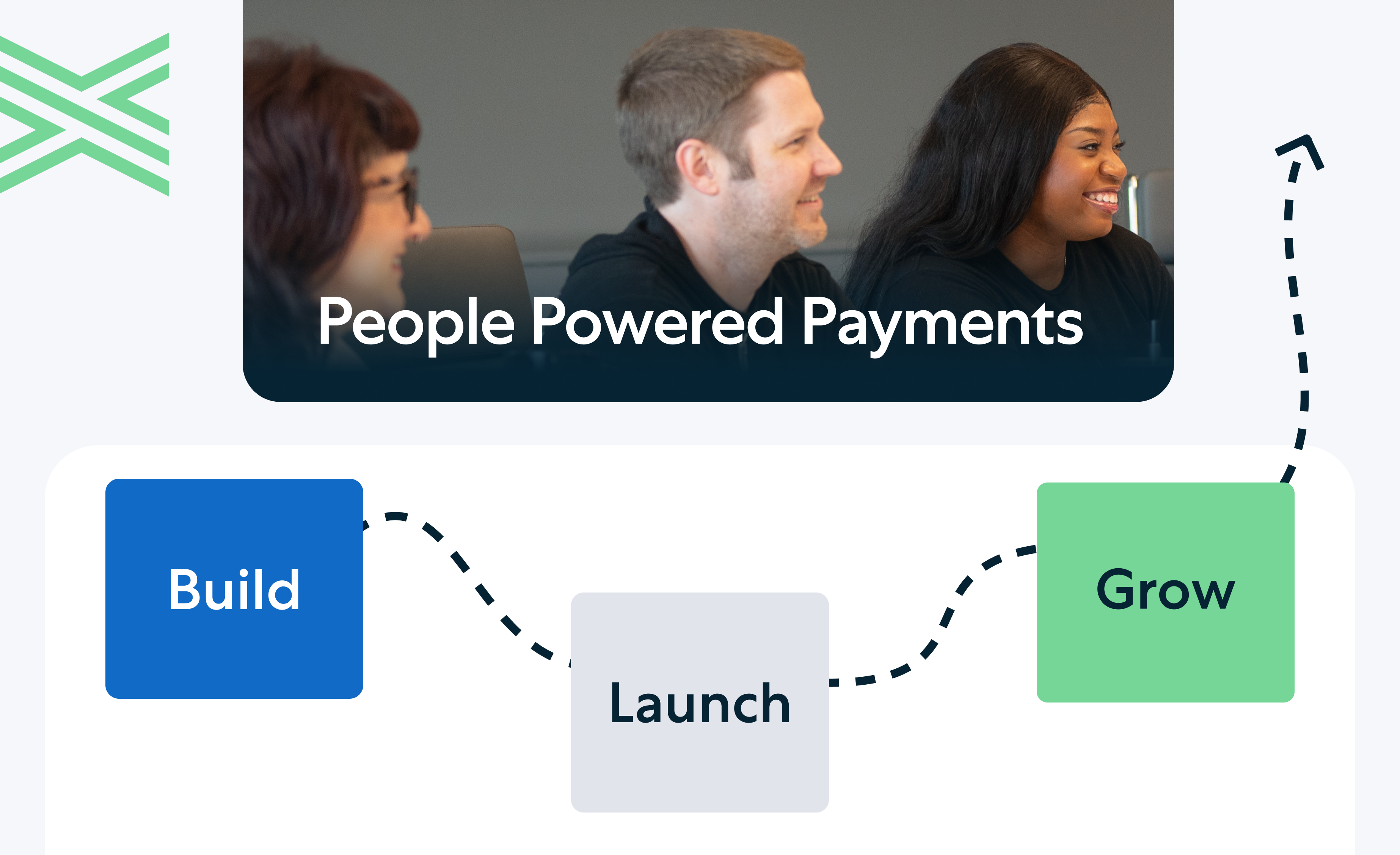
Hi. My name is Ray. I’m the VP of marketing here at Stax, and I’m so excited to have this session with you today where we’re talking about Beyond the API, Achieving Operational Success in Embedded Payments. And I have a awesome panel here with our payments experts here at Stax. Let’s get a little bit of an introduction to each one, and I’ll call, each of you out. And, if you just wanna tell us a little bit about, your role in particular, let’s keep it short. We’d love to do that. So, Aliza, I’m gonna start with you. Awesome. So, yeah, I’m Aliza. I’m the senior manager of partner marketing here at Stax. I’ve been with the company for over five years, and our I lead our partner marketing team. The main goal for my team is to help our partners drive payments adoption through marketing support and enablement. So Awesome. Thanks, Aliza. Brandon, I have you next. Alright. Thanks, Ray. So my name is Brandon Newell. I’m a partner growth manager. I work with our partners on growing their overall payments adoption and making sure that they are really capitalizing on our mutual product that we’re bringing to market and while taking care of their customers. I’ve been with Stax for over two years now and in the payments industry for fifteen. Love that. Faria, you’re next. Hi, everyone. My name is Faria, and I am the director of partner solutions. So I work with the account management team, our partner success associates, and the merchant advocates just to support our partners in every single way possible. I’ve been with Stax for about three years now. Awesome. Thank you. Karina? Hello. Karina Mills here, director of solutions engineering. And, my team will help our partners during integration and after integration to make sure their technical integrations and, basically, all their technical needs are kind of fulfilled through our partnership. And last but not the least, Ricky. Hey. Thanks for having me, guys. So Ricky Dunbar, head of professional services at Stax. At Stax, that basically means implementations, solutions, support engineering. Get the pleasure of working with all these wonderful people on on this call and many others to to make sure that the the dream that our partners have for for an integrated payments experience is is met across the board. So holistically, start to finish, all the pieces kind of fit into place and work as, as needed to to get the best results. Awesome. Thank you all of you for being here today and sharing your expertise. So we touched on a little bit with the title of the webinar. Right? We’re going beyond the API. Right? So I think a lot of times when we’re thinking about embedded payments and as a SaaS platform, you’re thinking, well, I just need to, you know, put payments embed payments into my platform and call it a day. So really, what we wanna hit home today with our webinar and with the tips and, different, best practices that our experts are gonna share is really about not only do you need to have the payment side of things, but you also need to have the people operations side of things to truly ensure success with payments as a vertical SaaS platform. So that’s really what we wanna hit home on today, and we’ll just jump right in. So when we’re looking at, and so this is a question here for Ricky. When we’re looking at success in with with payments, especially from a vertical SaaS perspective, what are some key considerations that companies should keep in mind when building their payment strategy to ensure long term success? Yes. So this is one of my favorite topics and why I’m really glad to be able to to participate in this webinar. So I I think it’s an important question because I think that’s the piece that gets overlooked the most, which is if you have a if you work with a partner who has great documentation, really kinda clear cut if you build this, this is what you can expect. It’s really that that execution piece that is the most important part. The technology is great. Obviously, that’s critical. But it’s what you do with it once you have it and how it kind of flows to the organization, and and to the customers, to the to the merchants that ultimately drives that success. And so I think that starts first off with having full buy in across the organization. Everyone who’s who’s part of that org, that that ISV, that platform, everybody needs to be bought in that this is going to be a strategy that is part of that company’s growth. This is tied to our growth. This is connected to x, y, and z objective in our AOP or whatever it may be. And that that, instruction in that direction is coming from the highest levels of leadership. So your your your CEO, your ELT, what have you, those are the folks who are pushing that down, going to their teams and saying, hey, guys. This is really important. We need to do this. But not just, hey, go do it, but here’s the why. This is the intent behind this. This is what it’s going to do for our organization. What where we’ve seen a great deal of success with our partners is the ones that take that, that plan, that vision, communicate it very clearly down to their teams, but more importantly, explain to them this is the impact this is going to have, and they’re transparent about why that impact matters. It’s not just the why we’re doing payments, but the why the why. It’s like just like kind of that double layer, if you will. Super important and and where we’ve seen the most success with our partners. As far as, like, that broader org buy in, there’s also a couple other things that I that I kinda like to mention as we’re talking to partners and and, you know, I guess you call them useful tips they could take away. We’ve seen really great success with our partners who have, comp plan alignment for their teams. So they’re they’re effectively selling payments, and that can take a lot of forms. You can sell payments as, like, an add on, which sometimes is that’s a great strategy. Other times and what often is more effective for ISVs is to sell it as a truly integrated solution. And and the the approach I take with them with that is I say, okay. You know, why would you buy this software if you didn’t also want to get paid? Like, if my software sends an invoice or give someone an opportunity to pay, why would I not make it easy for them to do so? So in that way, you’re selling it as an integrated solution and payments really isn’t like this add on. But to incentivize the team, to build this into comp plans, those types of things can be can be super effective. And then the objectives around payments, just making sure that’s transparent and that it’s shared very broadly. So if anyone is kinda wondering, like, you know, we’re doing this thing, but why? They should be able to go and get that answer easily, and it shouldn’t be like this maze of different people they have to ask the question to to get at the result. People want to build things that they know are going to impact others. And if they understand the intent and the purpose behind that, then their work is going to be more meaningful and more impactful, you know, just as a function of that. So, those are kinda some high level things and and, you know, happy to, like, drill down into any stuff if, anybody has questions. Yeah. I really like the points, you know, from that from that kinda top down vision for payments, you know, call it a payments led growth strategy, or, you know, whatever you wanna call it. Really just kinda thinking about payments, like, as a bigger piece, not just as a little bit of a add on or bolt on type of not only solution, but just a, you know, strategy or thing to thing to add into the overall platform or company. Yeah. It’s one with the platform. That’s the best way to think about it. It’s like, it it has the the platform is enriched because it now has this thing that’s part of it. Yeah. Yeah. And so, you know, you think about the alignment that needs to happen there from a people side. You need to have alignment, you know, not only from the executive leadership, but you need your product team to be aligned with that. Right? You need your, your customer success team to be aligned with that and also your sales and marketing teams as well. Right? Absolutely. Yeah. It’s it’s it’s across the whole org. And I I think, again, I’ll just I’ll hit this point one more time. But I think that’s the piece that a lot of, a lot of ISV software platforms miss is that it’s it’s not one of those if we build it, people will just consume it kind of approaches. It’s it really needs to be broadly across the org. It’s gonna touch everybody in some way. So having them be a part of that as early on and bought into that from the beginning is, is really critical. And do you typically recommend or see, you know, just like one person owning more of the payments kind of responsibility or, you know, what what kind of advice would you give to a company, that maybe doesn’t have that person in house? And you know, maybe, you know, another question would be if they don’t have that person in house, then what should they look for, you know, in a potential payments partner? Yeah. That’s so it’s a great couple of questions. So I I I generally do think it is one person. Yeah. I I I operate very much from the mentality of, you know, it it’s, you know, single threaded accountability tends to yield the best results. So if you have an individual who’s responsible overall for the success of the program, I think in most cases, you’re gonna see a better outcome. That said, though, you have to support that person. Any one person can’t necessarily do all of the things by themselves. What we’ve seen with many of our partners, over the years is that they’ve just steadily grown those teams out. So they’ll start with one person. They’ll They’ll start to learn payments, or maybe they already know it. Sometimes they come in already having a a background, on some fundamentals and payments. But they have to still learn it in in the way that that platform wants to implement it. And so you gotta give that process some time, and you’ve gotta let that person get comfortable with it. And then as that grows and as you add more more of your customers, more merchants to the platform, you’ll steadily wanna grow that team out. But you don’t need to become, you know, you don’t need to become a payments company, essentially. Like, that that really is why you should be leaning on your partners because they’re gonna take care of almost all the behind the scenes stuff that, you know, you kinda don’t wanna get into, and that’s why you’re partnering. But you are gonna wanna have folks who who can understand both sides of that and can can speak to your customers, with a high degree of confidence and and really get them excited about this, you know, the solution and and how it works for them. As far as, like, you know, kinda looking looking for that right person or or or where that goes, my recommendation is, you know, talk talk to your payments partner. Find out, like, who are the types of people that they hire? What does that profile look like? Do they even have a job description they can share with you? You know, we’ve worked with partners in the past where we’ve literally done that. We said, oh, you know, we know exactly the thing you’re trying to hire for. We’ll share with you our job description. You can repurpose that, and that’s gonna save you a ton of time. And it’s also gonna get you, in it’s gonna get you the right candidate pool faster. Because the last thing you want is to put out a job description that that doesn’t really explain it, and then you start to get folks coming in who are like, well, I think it’s this, and it isn’t. And then, you know, you disappoint you disappoint them and yourself at the end of the day. Or yeah. I think that that’s key. So, Ricky, thanks for that kind of clarity on a strategic approach to the payments and the people side of things. Brandon, a question for you. So, you know, once we’re launching this new payments product, what signs indicate, companies should review their current payment strategy and consider maybe adding more people, to the mix to improve results. Yeah. So, Ray, one of the things that we see a lot is when there is a increase in customer churn. So payment related friction, like failed transaction, limited payment methods being offered at the time of transaction, or just complex billing procedures overall can drive your customers to go to your competitors that are in the marketplace offering new innovative, streamlined processes. So, really, if you see an uptick in churn overall with your user base, it’s really a key indicator that, hey. Something’s wrong. Let’s go back and revisit this. Or on the off on the other side of that, if we’re looking at support tickets. So let’s say churn isn’t the problem, but you’re seeing an influx in support tickets where your support tickets are rising with customers coming to you with frequent questions like, hey. I have some billing errors. I have questions about my merchant statement, and that’s a continuous question that’s coming about. Or even something as simple as terminal troubleshooting and uptake in that, that can be an indicator that, hey. This go to market strategy that we have in place right now might not be the most ideal and might not be what our customers are looking for out of us. That’s really helpful. Yeah. Keeping track of some of those metrics, especially on the churn side, You know, you really wanna pay attention to that, and then really see, you know, are the are these related to, you know, what we’re doing on the payment side. A couple of highlights here I wanted to go over. The, when we’re thinking about, embedded payments, you know, there we have an approach here at Stax. We like to call it the build, launch, grow approach. So, you know, when you first get, you know, started with payments, you wanna kind of work on the implementation. How do you grow that? How do you, put that into your platform and make sure everything’s working correctly? When you’re launching it, now it’s like, you know, your go to market strategies, your pricing strategies, and how do you actually put this aside to your customers so that they can start to adopt it. And then on the growth side, it’s continue to watch that, you know, after the launch, watch that adoption continue to increase. And one of the things that we’ve seen at Stax is, with a team of dedicated kind of payments experts, we can really help to increase those onboarded bids. We’ve seen some some increases as much as thirty six percent increase in onboarded bids. We’ve seen a lift of ninety three percent from revenue from onboarding merchants. So some of the things that, we have in place as as far as our payments expertise to really help align with each of those stages to help you really drive that, revenue from payments. So I’m gonna switch over a little bit to and focus into that build section a little bit and really talk through the implementation side of things and, you know, wanna get some key insights into what, you know, SaaS companies should be looking for during that stage. So, Karina, could you tell us what what does a successful implementation look like? Yeah. I I love this topic. So I’m in a really unique position, I think, here here at Stax and then just generally to be able to see what happens when an implementation goes really well and also what happens when it doesn’t go so well. Right? Because, we’ll get if if there are issues that happen, those will come at the very end of the implementation at the go live and beyond. And a lot of those issues are things that could have been avoided during the implementation. So when we’re thinking about an implementation, it is very holistic. It’s not just, hey. What can we do to get this product to market, to go live, to say we did the thing? It’s to also think about, again, that strategy that you talked about a little bit earlier is what is what is the long term vision of your company, and what do you what do you want your payments experience to be for your customers kind of going forward? So, it does, again, really start with the that people, that group of people that are working on the implementation and having that dedicated person. I know Ricky talked about it’s really important having a dedicated person for payments, and maybe you don’t have that person. And if you don’t have that person, the skill, I would say, kinda to answer your question you had a little earlier, Ray, is finding someone who’s really open to learning, who really wants to know all, like, the nitty gritty in the weeds things about payments because there’s a lot of really complex, nuanced things to know. When you know payments, you know what I’m talking about. And finding somebody who is really, like, ready to dive in and learn all of those things is really important because that is part of our implementation process. It is making sure that technically, you know, somebody has to understand how that API integration is going to work in the software, but then everything else that goes along with the payments. Right? So it’s it’s great to have a whole team dedicated to the to that integration and beyond. But when you don’t have when you can’t have, you know, multiple people from all the different facets of your of your business, maybe you have a smaller business, finding that one person who can really own the process and teach others within the organization is gonna be really critical. And I think probably the second part of that just in what I’ve seen makes it an implementation really successful is having a really solid project plan for that initial integration, having steps that need to be accomplished, understanding what happens when you don’t meet those deadlines. Right? What are what’s the downside if you can’t go live, you know, March thirty first if that’s your date? Those are things to to really consider when you’re talking through and talking with your payment provider as well because they can help you through that to figure out, okay, how can we make this work for you. So I think those are probably some of the biggest things that really make an implementation successful that I’ve seen. That’s really helpful. And, you know, we’re not here to call out anybody, but, you know, when I think about a payments API or, you know, I don’t have to name a certain company, but you think of a global payments API company that maybe focuses on a lot of startups and a lot of people like to use them and, you know, maybe easy to implement. What, you know, what what is the difference now between, you know, a partner like that versus, like, what what a you know, what should you look for in a payments partner to truly be successful? Karina, what do you think brings into that? So I think if you kinda going back to that, hey. Maybe you only have one person who can be dedicated to payments and they’re brand new to payments and don’t know anything about it. They don’t have to sift through all the documentation to try to figure things out themselves. You really want, like, that what you want out of a what you want out of a payment provider is somebody who can walk you through what are the most important things that you need to know, not just for now, but for the future. And, like, how can you help unpack what that strategy actually really means and teach along the way and and help guide the developers. I I’ve worked with many development teams that are new to payments that maybe their developers don’t have experience with payments. So looking at documentation is is one thing. Understanding the why, between implementing one way versus the other is gonna be really critical, and that’s what our our teams, like, here at Stax, for example, we would help guide through that process because we don’t want you to feel alone in that process and feel like you’re looking into, you know, documentation, this a needle in a haystack type situation. Yeah. Yeah. And, and can you give us, maybe an idea and, you know, maybe every every, potential partner that comes to us is gonna be a little bit different, but what kind of teams could, you know, would would they would they be looking at or, potentially working with if they if they worked with a, you know, payments partner like Stax? You know, what do we kinda offer, you know, bring to the table versus, like, you know, some of the other people that are out there? Yeah. So for for example, here at Stax, we like to give you, a team. So you’ll have an implementations team that you’re working working with, and that’s that’s what you’re what you’ll want. You want somebody that you can go to with all your questions. We’ll get you covered on all the business side of the house as well. So you’ll have an implementation manager, for example, that walks you through that checklist of all the different items that you need to care about based on how you’re going to market. For example, do you need to learn how to sell payments? And that’s the first thing. We’ll get you set up. That’s an item we can we can get checked off. But then on the other side for a technical integration, you know, many of our many of our partners and many partners are looking for something that’s integrated within their own software where there is that API integration, and it can be complicated. So we have somebody dedicated that’s right there alongside your implementation manager and the rest of the team that can help answer those questions in the moment, get on a phone call, talk through questions, block the developers real time in that venue, and really just be their core in the communication to get you through into your launch. Awesome. Yeah. I love I mean, even, you know, even if you’re just looking at, you know, what kind of potential partner should you look for from a payment side, just knowing how complicated payments is, and just understanding you really would love it would be great for you to find a partner that is able to support you in many, many, many different ways versus just, you know, just a one way, you know, here’s the API docs, good luck, or even just, like, offering just one person, to you, in in a support kind of role. So, yeah. Karina, thanks for that and really kind of breaking down some of the things that, that a vertical SaaS company should look at, during the build stage. So, you know, after we build Can I break some of that down? Yeah. For sure. Yeah. Yeah. So I just wanna build I just wanna I do wanna build a little bit on what Karina said because she hit on some really important parts. And your your question, the last one about, like, if you’re just getting, you know, like, really great technical readout docs and everything like that, that’s hugely important. I don’t wanna downplay, like, how important the readability and accessibility of the the technical documents is and and how easy it is to implement. I I do think, though, like, a lot of software companies when they come in, they get very, very captivated by that side of it. And they’re like, oh, this is gonna be great. It’s gonna be easy. We’re gonna hook this up. It’s gonna be amazing. That part of it probably will be, and they’re right about that. But what really matters is what are you gonna do with it once you have it? Because just because you have payments and you turn it on does not mean that people are just going to inherently use it. It’s just it’s not like they’re just, like, they gravitate towards it. Like, oh, you’ve got payments. I’m gonna use it. So it’s it’s super important, and we cover this very early in the implementation. Why are they there? Like, why are they doing this in the first place? Is that what’s the overarching need? What’s the driver for them seeking out the integration of payments into their platform? Because it it it’s an undertaking. Right? It’s not it’s not something you just turn on overnight. And the the follow-up to that is how how is it gonna impact your customer? Is this something specifically that they’re asking for? Have they told you, hey. I want to be able to do this, or it’s frustrating for me because I can’t do this thing. And if that’s it, work backwards from there. How do you get that thing to them in the way that solves that problem, whatever it may be, in the best manner possible for that customer? If you’re able to do that, I won’t say the sales will take care of themselves because it’s not quite that easy, but it will definitely make your sales team’s job significantly easier if they’re if they’re addressing a pain point that the customer has said, I this bothers me. Please fix it. And I have seen that across so many of our partners over the years, the ones that come in that are that are integrating payments because a competitor did it. Okay. I get it. Like, you need to be competitive. You need to be viable from a competitive standpoint. But what feature functionality are you implementing that is gonna set you apart? Because otherwise, all you’re doing is you’re get you’re getting close to a state of parity, but you’re not doing anything that’s gonna differentiate your offering from the offering of your competitor. So you’re just playing a constant game of catch up. And and that’s not fun. That it’s no one really wants to do that. But if you understand at a fundamental level what the customer is trying to do or what that pain point is, payments can actually solve a lot of those issues and that’s where what what Karina said about having someone you can pick up the phone and call them and say hey I need to solve this problem can payments help me without you call Brandon say Brandon I got this problem Can payments help me solve this problem? I think there might be something there. Brandon’s got the skill and the knowledge and the wherewithal to say, actually, yeah, I think there is, and here’s how you could go about implementing it. Alright, Ricky. I gotta ask you. You you gotta give us a story. Tell tell us an example of how, you know, somebody had a problem, and they asked the team. And the solution was, well, it’s payments is actually the is is the answer, and here’s how we go about doing this. Yeah. So oh, man. You put me on the spot. So I’ll I’ll give you No names. I’ll give you No names. Yeah. No names. They’ll be changed to protect the guilty. So so I’ll give you one story that I really like. There was, there was a partner who came to us, and they had a a customer who had who had expressed some real serious concerns over how much, aging receivables they had. And I I know I heard the com I was I was part of the conversation I was listening and I wasn’t in my mind thinking like this was a big number I was thinking like oh you know they’re just you know some people just pay late and that happens and as the conversation matured over time comes to find we come to find out that you know some of these customers had hundreds of thousands of dollars that had gone unpaid for years this is not an insignificant amount of money especially for an SMB if you have you know, in some of these cases, it was almost half a million dollars that’s just out there that you’re oh, this is work that your people have already done that no one has paid you for. And there they weren’t thinking of this as like a, hey. A better payments integration can solve this. As crazy as that sounds, that just wasn’t something that was on their radar. It was more so, how do we communicate with these people and get them you know, encourage them to pay, which is fine, but it’s not super effective. And so they sat down with us. We had this conversation, and the conversation wasn’t even about that. It was just something that was mentioned, and we’re like, wait. What? And then we were able to talk through it with them, and then when we explained, like, hey. Here’s here’s actually a way that you could go about maybe, you know, chipping away at that, putting a big dent in it. That turned into the new thing. The whole point of that call was thrown out, and we focused just on that one thing. And we’re actually able to get a solution spun up for them within a couple of weeks, and their merchants were able to start collecting on the on that money within the hour of them turning it on. Like, literally within an hour, we were getting emails from the partner going, oh my god. This is working. Our merchants are getting paid now on money that’s owed to them for, you know, a year plus. That felt great because these like, these are SMBs. Like, this could mean making payroll. This could mean paying Christmas bonuses. Like, this has implications that mean a lot. And so for for our team to be able to be a party to that and help facilitate that was was great. That’s awesome. Yeah. And just to be clear, that, you know, idea was a payments related kind of feature that, you were able to turn on for that particular partner. Correct? Yeah. It was a feature that they knew about, but they weren’t thinking about the application of it. And that’s that’s where you draw that’s where that line is between how good are the technical docs and the implementation versus how good is how good is the partner you’ve chosen at helping you solve business problems. Like, that that’s the piece that really matters. And if that tool in their toolkit is payments, great. And if it’s not, well, at least you can rule that out, and you can find the next thing to to help you solve it. I love that story. Thanks, Ricky. So we talked about building. Wanna now focus on launching. So when we you know, after you build something, you somebody already mentioned it already earlier. It’s not just if you build it, they will come. Right? So you there’s a building of it. There’s a launching of it. So really, letting your current customers know about the new pants product, how do you incorporate it into your new marketing materials and your new sales materials, etcetera. So, Aliza, we’d love to ask you, about how working together with, with the different teams and collaborating with our partners, how does that contribute to success of payments, especially when we’re looking at a long term vision, within, the embed the embedded payments product? Yeah. No. That’s a great question. So as everyone, I’m sure, on this call can speak to, payments are a complicated beast. Right? They’re not easy. I think Ricky said it. Karina said it. Everyone on this call can attest to that. But I think that the the difference the Stax difference and the value that we bring comes from our level of collaboration that we have. Right? So we have I’m gonna talk selfishly about marketing, but we’ve got, you know, just an array of resources, materials. We’ve got a portal. There’s a lot of different ways in which we support our partners to not only be able to, like, get them through the implementation phase, but then also be able to communicate the value of payments to their audience, which is again, it’s it’s a beast on its own because, we know that a lot of partners that come to us are really excellent at communicating the value of their product, right, to their customers. But I think payments takes a different angle, and it requires a different level of expertise to be able to communicate the value. And so we bring all the resources, and we’ve had decade long experience in being able to market payments. And so we bring we take all of the all of the learnings that we’ve had over the past decade and our success, and we are able to provide that to our partners. And so I’ll share an example. Right? So we had a partner who was struggling, with, attaching attaching payments. Their SaaS sellers were struggling with attaching, attaching payments. And so, they consulted with our team, and, we’re able to create a solution for them, right, that involved marketing and product. And we’re able to customize a boot camp, a training certification program just for them so that their SaaS sellers can learn how to market payments, and be able to sell it effectively. And then we also paired that with an incentive program. Right? So those are the kinds of solutions that are just are just not possible without collaboration, and our team does an excellent job of doing that for our partners. Love that. Is there a particular tip that you would give to someone, you know, thinking after they’ve, you know, they’re getting ready to launch their new payments product, what are what are what are so maybe a handful or a couple of different tips that you would give to them on how they should kinda go about doing that? Yeah. Absolutely. There’s a handful of things. I think the first thing is to think about differentiation. Right? Know their customer base and what they care about and build according to that instead of just putting payments out there, really have a strong value proposition. Right? Why are we like Ricky said, right, why are we building it and have a very tailored response to that? Because if you don’t know what your customers care about, you’re gonna build, you’re gonna integrate, but they’re not gonna they’re not gonna convert. And so some of our most successful partners have had that intention in mind, and have a very strong differentiate differentiation. Right? It’s not just, hey. It’s just payments. Everyone needs payments. It it allows the product to be more sticky if you if you give your audience, you give your customers what they’re asking for, and I think that helps build a really strong marketing case when you have that in mind. So I think that’s a great, tip. And then, also, things that we do are giving giving your sales, your customer support, giving them talking points that are beyond just pricing. Right? Again, that’s where the differentiation comes into play. So those are the top top tips in mind and have have someone that’s dedicated to payments marketing is also important. We’ve realized some of our most successful partners are partners that not just think of think of it as, you know, marketing their product, but have, like, a person that’s dedicated to payments marketing because, again, it’s a different sort of, it’s a different case scenario when you’re marketing payments versus just marketing your product. So those are some tips. Awesome. Love that. So at Stax, you know, one of the things that we really pride ourselves on is this payments expertise, and we’re not gonna get into really a sales pitch on, you know, the program that we offer, but we did we did have a whole other talk on Stax Connect Plus, which is a is really a program that will help make sure that you’re getting your payments revenue faster. Right? So we have dedicated sales teams, dedicated support teams to to adopt to your, your company’s vision and how they how they sell their product and really working hand in hand with your team to be, a kind of seamless experience in making sure that we’re able to help you, you know, get more of the payments adoption, to, you know, your current customers. So there’s a whole other, webinar on that, so we can share the link later. But, Aliza, can you speak a little bit about the ways that marketing has and the people within your team has helped, that particular program, to be successful? Yeah. Like I spoke to earlier, payments marketing is a thing of its own. Right? And so, typically, our we give our partners their resources, and they have to execute. But on the Stax Connect Plus side where we take on the support sales and marketing, we do that for for our partners. Right? So we’ve got a slew of different things that we offer. So we offer back book list support, which our customers our partners will provide us a list of their current customers, and then we’ll tackle, that on the back end with our sales team and close those leads. And then we also have inbound support. So those are the two different types of support that we offer from a Saks Connect Plus marketing, in addition to the sales onboarding and activation support. So Awesome. Thank you, Aliza. So we talked about building, you know, getting implementation, getting that payments product ready, putting it into your platform. We talked about launching. How do you you know, now that you have this thing built, how do you go and get more people adopting, get more of your customers using that payments product? And now we wanna talk about growing. Now how are you going to continue to increase that payment adoption within your customer base with all the new sales that you’re bringing in today. So love to ask you, Faria, what tips would you offer companies aiming to build a team that supports sustained growth and success in payments? Yeah. So building a team that can keep up with the constantly changing nature of the payments industry is, really requires a special blend of talent, mindset, and just someone that is willing to continuously learn, but it doesn’t necessarily mean that those people need to be industry veterans. From what I’ve seen, being able to build that team is about having at least, like, one key person just like everyone on the call has already said, just focused on that payments product. That person it’s great if that person is willing to learn, be adaptable, is excited about the innovation in the payments industry, and just has those clear goals outlined for them, from the payments company on what success means to you. So, like, you as a business, what how many merchants are you looking to convert? What is the wallet share you’re looking to get? That those kinds of goals are really important to be successful. And then once you have this team, I would say take advantage of your payments partner, their knowledge, their resources. So for example, at Stax, I’ll start way at the beginning. Our implementation team sets our partners up for success. They provide training. They not only train their sales team, but they also train the support team. They provide documentation to help build out their knowledge base. They’re just very hands on throughout the launch process to make sure that our partners and our internal Stax teams have that foundation, on, like, payments knowledge. And then they help to understand how payments works, but also, like, how your particular payments product works. So during this process and throughout the entire life cycle with our partners, our team is always looking to understand our partner’s business, their customers, their pain points, and just guide them towards an approach that makes sense for their business. And then after implementations, our account management and our growth management team kick in. They’re there to help with ongoing support. They’re gonna be that point of contact so that you know you can call them and have a person that you can reach out to, whether it is a payments one zero one question, whether it’s to escalate a ticket, whether it’s to ask a question about residuals. Besides that, those teams are always available to help build and continue to iterate on the payments product that you’ve already launched. They help share industry best practices and knowledge on those little nuance things that are so unique to the payments industry. And that’s just gonna help your payments product just be more successful. Yeah. I love that. So you mentioned, you know, having someone really kind of taking a deep dive into, you know, a particular company and their particular vertical, why is that important? Why why would someone want to do that versus just, hey. Payments is payments. Right? Like, let’s just get that in there and then, you know, it let’s just go. Alright? Yeah. No. I think the approach, the specialized approach is very helpful. I mean, if you’re looking at a business that is in field services versus a business that is in professional services, what’s important to that end customer is different for everyone. And so I think that’s where we stand out, our, like, approach to the different verticals and just taking that extra time to know, hey. This is our like, this is what your merchant cares about. This is our partner. This is what your, like, vision and values are on your website. Let’s talk to you about that. What do your merchants care about? What does your customer care about? And then that way, we can help detect those end goals, those pain points, and just develop the payments product even better and help support, you and supporting your support teams, your sales teams to sell the product better. Oh, that. So if I’m giving, you know, kind of packaging that up as a tip for our vertical SaaS leaders is to think about, your your audience, think about your customers, and then think about how do you have, you know, really some dedicated resources so that, you can understand your customers better and and looking for a partner that is able to spend the time to understand your vertical and your industry better so that, again, so then you can serve your customers better. So, yeah, I really love that point. So we’re kind of at the end of our, session here, but I wanted to give everyone maybe one last chance to go around and just share what’s one last piece of advice or, maybe reiterating one tip, that you would give to our vertical SaaS leaders that are on this call to help them think about the people’s side of things and how they should, invest in that regard. So let’s see here. I’ll start with Brandon. Alright. So thanks, Ray, for starting with me. I had some immediate thoughts on the forefront, so I’m glad I got picked first. So one of the most important things for a vertical SaaS company when bringing a payment solution to market is, as everybody said on this call, payments is complex. You don’t want it to be a build it, set it, and forget it solution. You wanna constantly revisit what you’ve brought to market to make sure you still have that competitive advantage. You wanna revisit that integration, make sure that, feature set that you’re offering your customers is something that they’ll use and something that they’ll benefit from. And if not, we one of the advantages of Stax is we have an entire team. We’ll go back and revisit that integration, work with you to make enhancements to that integration. But in addition to that, really constantly keeping an eye on your margins. The and that’s part of what my team does. So if you’re seeing a reduction in margins, it’s because the card brands are constantly changing the pricing for cards, how much it costs to take each individual card in the marketplace. And if you set your go to market price and don’t revisit that go to market price for two, three years, your margins month over month are continuously getting squeezed. So it’s important to always revisit your margins and make sure that you’re adjusting pricing when necessary to stay in tune with the market. I’ll bet. How about Aliza? You go next. Awesome. So, yeah, I was just gonna say, when you’re looking for a payments partner, it’s really important for you to examine and see the people that come with it, and not only just look at the technology because, yeah, Stax has great technology, but the people really do set it apart. And like you said like you already probably saw on this call, there’s support that we offer every step of the way. Right? From implementation to marketing to launch to growing, we offer that. And so it’s just important to examine that when you’re looking for payments partner. Maria, why don’t you, kick us off next? Yeah. Okay. So I’m gonna keep it super simple. And I think this applies to this conversation and many others, but collaboration is key. Always work with your internal teams, and our teams to just promote the learning, promote communication, and you will always be successful. I think, like, we’ve talked about already, our teams are always willing to listen, learn from you guys, and help just make every solution that we bring to the table more nuanced for your business. And so the more we can talk through, the more we can dive deep, the more successful we’ll be. Irina? I’ll just say the payments landscape is ever changing and will always be changing. So kinda to mirror what Brandon said, just be always thinking ahead to that. Like, what what you implement today is is not gonna be what what is in the implementation in ten years from now. There are new softwares that are introduced all the time. There are new compliance, regulations, things like that that are introduced all the time. So keeping that that in mind when you’re thinking about your team that’s gonna be managing that payments implementation and the the payments partner you choose. Love it. Ricky, why don’t you finish this off? Oh, I’d love to. Yeah. I would say I think all the examples that were shared here are are super super critical for this to be successful. I think the biggest thing for me is come into this thing with a plan. Know what it is that you’re trying to do. If you have that vision and you understand it, again, it’s very easy to work backwards from there, and that’s where our team excels. If you tell us we want to get to this point, whatever that point is, chances are we’ve run into that. Chances are we’ve encountered that, and chances are we’ve encountered that. Chances are we’ve already worked with someone to get them there, and we have a playbook on how to go about doing it. It’s different with each. It’s a little subtle. There’s nuances that you’ve probably picked up throughout the discussion today. But that’s what we’re great at. We’re really great at sitting down, coming to the table, understanding the business, hearing what it is you’re trying to get at, what’s gonna make your business successful, and how you envision payments contributing to that. But equally important, what do we see that you don’t? Because we’ve done this before and we understand payments? And and how do those two things marry in such a way that your your goals and objectives are getting hit? But you gotta start with that initial plan and, and be transparent. You know? Share share that with us. Share that with your partner. Let Let us know what it is, and we can we can help you from there. Awesome. Love it. Alright. Well, thank you everyone for sharing your, best practices, your tips, your insights on how, you know, companies can really achieve operational excellence within payments, especially from a people side. So thank you all for sharing. If you’re interested in continuing to learn more about Saks Connect and payments led growth and how we can help you make payments your fastest path to growth, reach out to our team. We’re happy to help. Anyone on this call is, you know, ready and able to, you know, answer any questions that you may have, you know, that you may have about your particular payments journey and where you’re at and maybe some ways that you can kinda continue to help grow that. So thank you again for joining us, and hope you have a great rest of your day.