Many merchants face the trouble of sifting through numerous credit card machine options, looking for a terminal that fits with their business. There are many different types of payment terminals to choose from, and you need one that’s going to help your business operate the most efficiently.
Selecting the right payment processing terminal will not only help reduce your processing costs, but it’ll also increase your profits. Let’s take a look at some payment terminal options and the types of businesses that best match their features.
TL;DR
- A credit card terminal is a device commonly used by businesses to handle credit and debit card transactions.
- There are many different types, including some that can take payments on the road.
- Choosing the right type of terminal for your small business requires understanding your business needs and doing your own third-party research on providers you’re considering.
What is a credit card terminal?
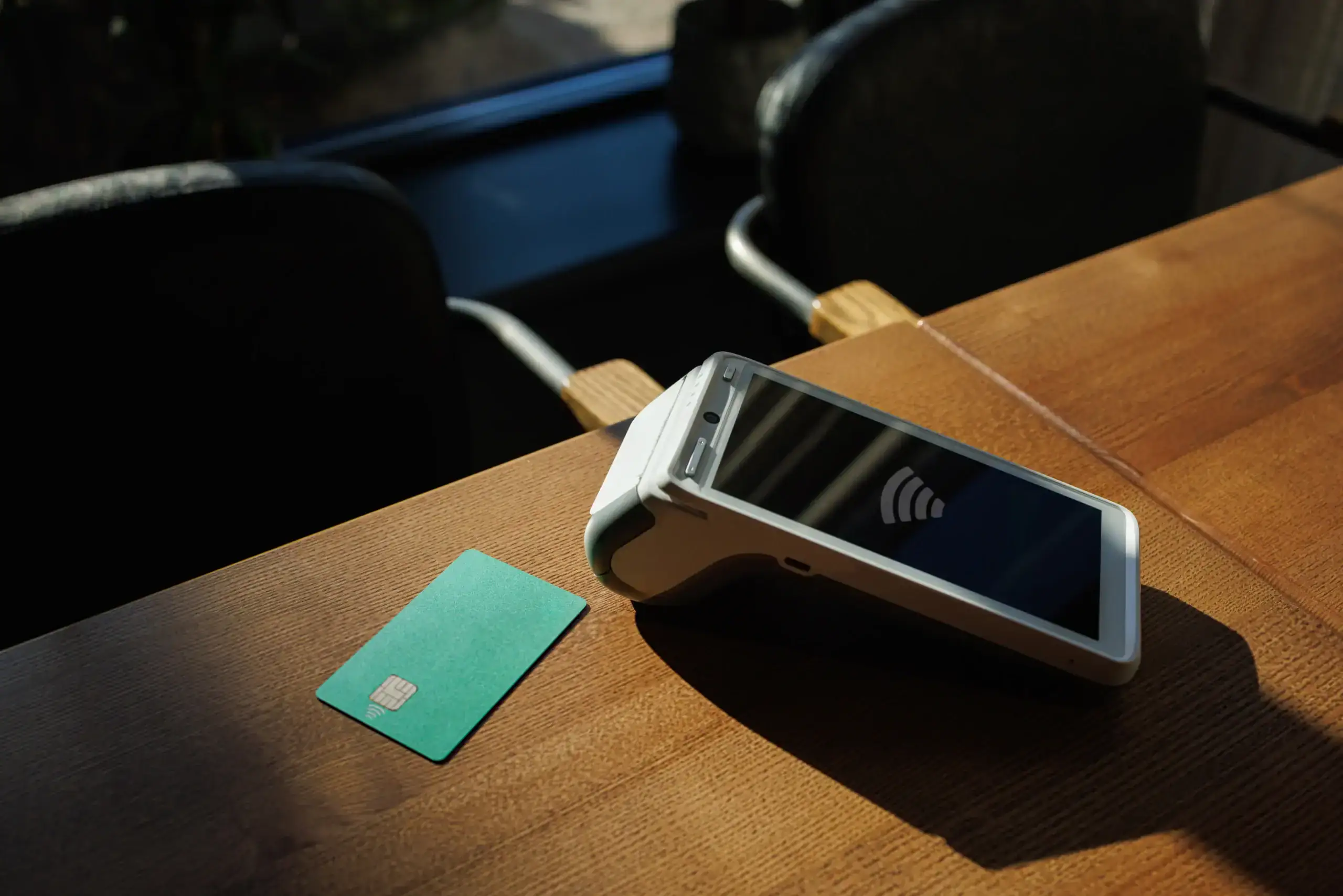
A credit card terminal is a device commonly used by businesses to handle credit and debit card transactions. Modern terminals can also take contactless payments from mobile wallets like Apple Pay and Google Pay. Terminals are the tool customers use to swipe, insert, or tap their cards, transmitting the transaction details to the payment processor for approval.
They’re essential for ensuring smooth and secure electronic payments at retail outlets, restaurants, and various businesses that accept card payments. Most importantly, they enable your business to offer a wide range of payment options to your customers.
Types of credit card terminals
Credit card terminals are available in a few different types, each of which provides its own benefits.
Countertop terminals
Countertop payment devices are stationary devices typically found at cashier counters in-store. They connect via phone lines, Ethernet, or Wi-Fi and are ideal for businesses with a fixed checkout location.
Mobile card readers
These are portable devices that connect to smartphones or tablets. They’re great for businesses on the move, such as food trucks, field workers, or delivery services, allowing transactions to happen anywhere with a cellular or Wi-Fi connection.
Wireless terminals
Wireless terminals are similar to mobile card readers in that these terminals offer mobility. However, they operate independently without the need for a separate mobile device. Wireless terminals operate independently using 4G/LTE cellular or WiFi, while smaller mobile readers typically pair with a smartphone via Bluetooth.
Virtual terminals
Virtual terminals are software-based interfaces that allow merchants to process payments via any internet-connected device with a web browser, including laptops, tablets, and smartphones. They’re often used for phone or online orders where the card isn’t physically present.
Integrated payment systems
These are terminals that integrate with the POS systems (point-of-sale), combining payment processing capabilities directly into the business’s existing software, acting as an all-in-one system. Integrated systems ensure that when you ring up an item in your POS software, the total is automatically pushed to the terminal, reducing human error and speeding up the checkout line.
Your business may use only one type or multiple depending on your needs and business model.
The traditional retail payment terminal
Businesses like retail stores or restaurants involve face-to-face interactions with your customers; therefore, your credit card transactions with them are exclusively in-person. These are referred to as “card-present” transactions, which basically just means the cardholder and credit card is physically present at the time of sale. For this type of transaction, your best payment terminal option would be a countertop point-of-sale (POS) model.
Countertop credit card terminals allow you to swipe your customers’ credit cards through a credit card reader to process the transaction. If you want to add a PIN pad, you’re enabling greater security, and in that case, you can also process debit cards and EBT cards as well.
You also have the option to add a receipt printer to a countertop terminal. You can print a receipt for your records or offer customers an eco-friendly digital receipt via text or email.
While card-present transactions are standard, it’s also possible to use a countertop payment terminal in a “card-not-present” (CNP) situation. Merchants who accept mail, telephone/fax, or online orders can send the credit card information to the terminal (via keyed-in transactions) in order to process the sale.
RELATED: How wireless credit card processing works
Recommended credit card terminals
If your business needs traditional credit card terminals, consider the following:
QD2 Dejavoo (mobile wireless) – The QD2 Dejavoo can process high-performance chip, swipe, and contactless transactions. Equipped with a touch screen, long battery life, Wi-Fi, and 4G/LTE connectivity, it’s ideal for on-the-go businesses like field service providers or event vendors.

QD4 Dejavoo (countertop terminal) – The QD4 model is a top choice if you seek a dependable, feature-rich countertop terminal. It features Ethernet/WiFi connectivity and a high-speed thermal printer, and it accepts chip, swipe, and contactless payments. Best suited for traditional retail setups.

SwipeSimple B350 Reader – The SwipeSimple B350 Reader connects to iOS and Android mobile devices via Bluetooth. It processes EMV chip cards, magnetic stripe (magstripe), contactless tap-to-pay cards, and mobile payments. It’s a smart choice for food trucks, market vendors, and other on-the-go professionals.

Dejavoo D1 (cloud register) – This cloud-powered, all-in-one POS solution is ideal for restaurants and retail shops. It features merchant- and customer-facing display screens and accepts chip, swipe, and contactless payments.

Mobile and wireless payment terminals
Outside of traditional retail are mobile and wireless terminals. These usually work best for merchants and service professionals who operate in the field and need payments collected at the customer’s home. Mobile and wireless credit card terminals work over an internet connection (either via WiFi or a cellular network), and are a great solution if you’re an on-the-spot merchant. These terminals also offer a better alternative if you’re tired of billing your customers and waiting for the payments to come through.
These devices are also gaining popularity in retail and hospitality. Thanks to their mobile functionality, retailers can ring up sales on the shop floor, while restaurant staff can bring the checkout experience to diners. Both instances help streamline payment processing and improve guests’ experiences.
Stax offers Tap to Pay through the Stax mobile app for iOS, helping merchants to accept mobile payments anywhere they conduct business. With absolutely no additional equipment to purchase, all a merchant has to do is download the app on their mobile device, activate the application, and right then, they have a handheld terminal at their fingertips. This mobile payment processing solution is compatible with iOS operating systems, and it’s supported by all major wireless providers.
Wireless terminals could also be the processing solution your business needs. These are compact and portable, and they allow you to keep up with sales in the field with more secure processing.
Mobile and wireless terminals enable merchants to go beyond traditional point-of-sale and cash-only operations. They both provide a new, updated, and innovative way to accept credit card payments from customers.
Recommended payment solutions: QD2 Dejavoo; SwipeSimple B350 Reader; Tap to Pay through Stax.
Virtual credit card processing terminals/ecommerce
Today’s customers rely heavily on the Internet to find services and shop for products. Merchants who accept “card-not-present” transactions, either online or over the phone, would benefit from a virtual terminal. Since there’s no need for a physical and traditional credit card terminal, a virtual terminal uses software to process online transactions.
At Stax, we offer a secure virtual terminal for our internet-based merchants who process and manage telephone, and even face-to-face transactions. As long as you have an internet connection, you can process payments directly through your website.
Selecting the right payment terminals for your small business
There are numerous credit card terminals, readers, and solutions in the market, so selecting the best one can feel overwhelming. You can simplify the process by following these tips:
1. Figure out your needs (and wants)
Take the time to figure out your payment terminals and processing needs. Do a bit of introspection for your business and ask yourself questions like:
- What does your checkout process look like?
- What payment types do you need to accept?
- Will you need a mobile card reader?
- Are you looking for a merchant account?
2. Understand fee structures
There are several ways that payment processors structure their fees. At Stax, we offer a subscription-based pricing plan, as well as access to direct cost processing with no contract, no markup, and no hidden fees.
Rather than taking a cut out of your sales, Stax provides access to direct wholesale interchange rates—the same rates used by the world’s largest retailers—packaged into a transparent subscription for small businesses. With Stax, businesses often save up to 40% in payment processing costs.
To choose the most cost-effective provider, you should start by looking at your credit card processing volumes. Most credit card and debit card processors charge a markup based on your transaction values, which means the more you process with your credit card processor, the more you pay. This is not the case with Stax. In fact, the more you process, the less you pay.
3. Read customer reviews
Once you’ve got a shortlist of providers that fit your needs and are within your budget, you need to verify that the company is actually reliable and good to work with. These days, there are a lot of third-party sites that collect reviews on B2B software providers, like Capterra and G2. By reading through these reviews, you can verify the claims that the company makes during the sales process.
Get the right credit card terminals for your business
Looking to level up your payment processing?
Get in touch with Stax today to learn more about the credit card terminals we offer and the payment solutions that would benefit your business the most.
FAQs about credit card terminals
Q: What are some of the best payment terminal companies for my business?
Some of the best payment terminal companies include Dejavoo, available through Stax. This company offers different models of payment terminals, such as the QD2 Dejavoo, QD4 Dejavoo, D1 Dejavoo, and SwipeSimple B350 Reader, each catering to various types of businesses.
Q: What are the benefits of choosing the right payment terminal for my business?
The right payment terminal can help reduce your processing costs and increase your profits. It can also streamline your checkout process, improve security, and offer an enhanced experience to your customers by accepting different types of payment methods, including mobile and contactless payments.
Q: What is the difference between a traditional retail payment terminal and a mobile or wireless payment terminal?
Traditional retail payment terminals are primarily used for in-person transactions at retail shops or restaurants. On the other hand, mobile and wireless payment terminals are ideal for businesses that operate on the go and need to collect payments at the customer’s location. These terminals work over an internet connection and provide a convenient alternative to billing customers and waiting for payments.
Q: What are some recommended payment solutions for businesses that need a mobile-friendly payment terminal?
Mobile-friendly payment solutions include Tap to Pay through the Stax mobile app, the SwipeSimple B350 Reader, or the QD2 Dejavoo. Tap to Pay through Stax allows you to accept payments using your mobile device; the SwipeSimple B350 is a lightweight and compact device that can connect to your phone via Bluetooth; and the QD2 is a wireless terminal accepting swipe, dip, and contactless payments.
Q: What is a virtual credit card processing terminal?
A virtual credit card processing terminal is a software that enables merchants to process “card-not-present” transactions online or over the phone. This type of terminal is beneficial for businesses that operate online and require an efficient way to process payments directly through their website.
Q: How do I select the right payment terminal for my small business?
To select the right payment terminal for your business, consider your payment processing needs, the types of payments you need to accept, and whether you need a mobile card reader. You should also evaluate your credit card processing volumes, as most processors charge a markup based on your transaction values.
Q: How can Stax benefit my business in terms of payment processing?
Stax offers subscription-based pricing plans and access to direct cost processing with no contract, markup, or hidden fees. Instead of taking a cut from your sales, Stax charges a flat membership fee and gives you access to wholesale credit card processing costs. This could result in savings of up to 40% in payment processing costs for your business.


