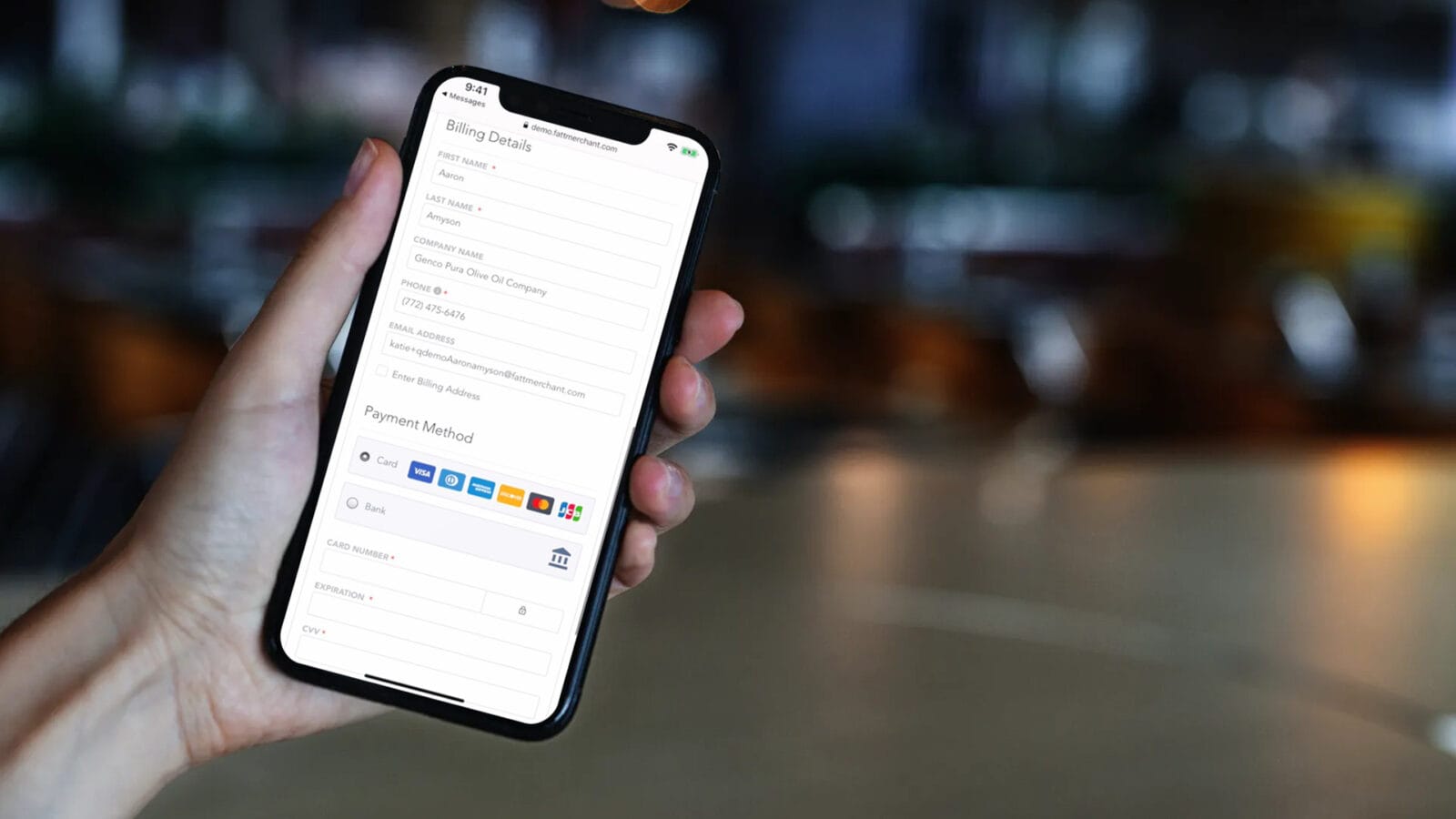
Virtual payments are no longer optional. These days, they’re a baseline expectation for how consumers choose to pay. So much so that Juniper Research forecasts virtual card payments to exceed $17.4 trillion by 2029. That’s a 235% increase from 2025.
This shift toward fast, touch-free, and remote payment methods means businesses need to support more than just traditional card-present transactions. From digital wallets to real-time payment links, customers expect flexible, frictionless ways to pay anytime, anywhere.
That’s why offering a wide range of virtual payment options isn’t just a nice-to-have—it’s essential to staying competitive and getting paid faster.
What is virtual payment processing?
Virtual payment processing is the technology that enables businesses to accept and manage payments without a physical card or in-person interaction. It covers everything from online checkouts and payment links to digital wallets, ACH transfers, and virtual terminals. Instead of relying on a card reader, payments are processed securely through internet-based systems, making it easier to get paid faster, streamline operations, and meet customers wherever they are.
With that in mind, here are some of the easiest ways to process virtual payments, all available through the Stax platform.
Add an online shopping cart
An online shopping cart, or ecommerce shopping cart, allows customers to shop directly from a website via a desktop, tablet, or mobile device. Online shopping cart systems typically include a full range of ecommerce capabilities, including payment processing and product management.
Adding a quick online checkout link to your services has been made easier with the creation of the Stax hosted checkout page/payment link tool. Simply select your catalog items, click create, and your checkout link is ready to process online orders for your customers. No coding or configuration is needed to build your shopping cart.
Offer text-to-pay as an instant payment option
Text-to-pay is the process of accepting payment through mobile text messages. As an innovative payment processing tool, SMS payments (short message service payments) improves overall payment accuracy and efficiency.
With the text-to-pay feature, you can send an invoice to your customer via SMS text, making it extremely convenient to be paid. By sending an invoice over text, your customer is more likely to respond right away (versus email). If they store credit card information on their phone, they can easily pay you with just a few taps.
The contactless payment solution is a great fit for any industry or business that uses recurring billing. It can also be used to collect one-time payments by businesses with individual payment requests.
Use a virtual terminal for electronic payment requests
Virtual terminals are built into your integrated payment platform and can accept a variety of payment types, typically including credit/debit cards, and often integrate the ability to accept ACH bank payments. The added benefit is the increased flexibility in accepting payments over the phone, online, and in person. And you can do so without ever having to use a physical card.
Built for online invoicing and recurring billing, virtual terminals for payment card processing help you accept digital payments instantly with ease. The virtual terminals for payment card processing are fit for those businesses that primarily operate over the phone, handle online invoicing, or have recurring monthly memberships. This includes restaurants, food delivery services, freelancers, health and fitness services, and professional services.
Add touch-free mobile payment solutions
Also known as Tap to pay, touch-free mobile payments are now in the adoption process by all major payment processors, such as Visa, MasterCard, and American Express. Users of these cards set up their payment card information on their mobile device once. From there, they can use the tap-to-pay method for any subsequent purchases of their choice.
You can also add a contactless terminal that accepts various types of payment types, including credit and debit cards, Apple Pay, and Google Pay, which use NFC (near-field communication) technology. You can now offer Tap to pay through the Stax iOS mobile app.
Manage virtual payments requests with email invoicing
Email invoicing is the exchange of the invoice document with an embedded payment link, allowing customers to click and pay instantly. This avoids the manual intensity and human error prone to traditional paper invoicing, which often results in increased costs and payment processing lifecycles for your business.
Email invoicing, or electronic invoicing, is an easy and safe way for businesses to send out online payment requests. With a simple click, your customers can open the invoice via email, input their preferred payment information, and pay you instantly. Virtual payments are important to modern business success. Without them, you are unable to accept payment methods that are becoming an industry standard.
Why virtual payment processing matters for modern businesses
The way customers pay has changed fast, and businesses must keep up if they want to increase their margins. Today, people expect to pay online, through digital wallets like Apple Pay and Google Pay, or through quick payment links.
Virtual payment processing helps you meet those expectations, so you’ll have happier customers.
It’s also good for business. Consider this: Instead of waiting on invoices or dealing with check payments, with virtual payments, you can process payments instantly and move funds into your bank account faster, which directly impacts cash flow and available working capital.
Virtual payments vs. traditional payment processing
Traditional payment methods rely on a credit card terminal and a physical card being present. Think swiping or inserting a credit card or debit card in person. These in-person payments are still common, but they’re limited to specific locations and business hours.
Virtual payments, on the other hand, happen entirely online. There’s no need for a card reader. Instead, customers enter their card details, use a virtual card number, or pay through mobile wallets. Businesses can send payment links, run transactions through a virtual terminal, or set up recurring payments without ever handling a physical card.
| Feature | Traditional payment methods | Virtual payments |
| How payments are made | Customer uses a physical card at a credit card terminal (swipe, dip, or tap) | Customer pays online using card details, a virtual card number, or digital wallets |
| Location | Requires in-person interaction at a specific location | Can happen anywhere with an internet connection |
| Payment tools | Card readers, POS systems, terminals | Payment links, virtual terminal, online checkout, invoicing tools |
| Customer experience | Limited to business hours and physical presence | Flexible, fast, and aligned with modern customer preferences |
| Payment methods supported | Credit cards, debit cards, limited contactless | Multiple payment methods including cards, ACH, Apple Pay, Google Pay, and more |
| Speed of transactions | Typically fast in person, but limited by location | Supports fast checkout and even instant payments |
| Recurring payments | Requires manual setup or additional systems | Built-in recurring billing and automated payments |
| Data handling | Card is physically present; data captured via terminal | Card details entered digitally or tokenized for added security |
| Security considerations | Lower fraud risk due to card presence | Higher CNP risk, but mitigated with encryption and fraud prevention tools |
| Business impact | Works well for storefronts and in-person payments | Improves cash flow, enables remote sales, and helps many businesses scale |
Common challenges with virtual payments (and how to solve them)
While virtual payment processing offers several benefits, it’s not without its challenges. The good news is that most of them are manageable with the right setup.
Higher card-not-present (CNP) fees
Because virtual payments don’t involve a physical card, they’re considered higher risk by payment networks. That often means higher transaction costs compared to in-person payments.
How to solve it:
Look for a payments solution that offers transparent pricing or alternative methods like ACH or virtual cards for certain transactions. You can also offset costs by improving efficiency and reducing manual work.
Fragmented tools and workflows
Many businesses start by stitching together different tools—one for invoicing, another for subscriptions, another for online checkout. Over time, this creates a messy payment process that’s hard to manage.
How to solve it:
Use an integrated merchant services platform like Stax, which brings everything into one place. When your payment methods, reporting, and customer data are connected, it’s much easier to process payments, track performance, and scale.
Final words
With Stax, your business gains access to the flat (interchange) rate with zero percentage markup on card-not-present transactions, coupled with access to the full toolkit, including the Stax virtual terminal, text-to-pay, and our one-click shopping cart.
Reach out to Stax for a consultation today.


